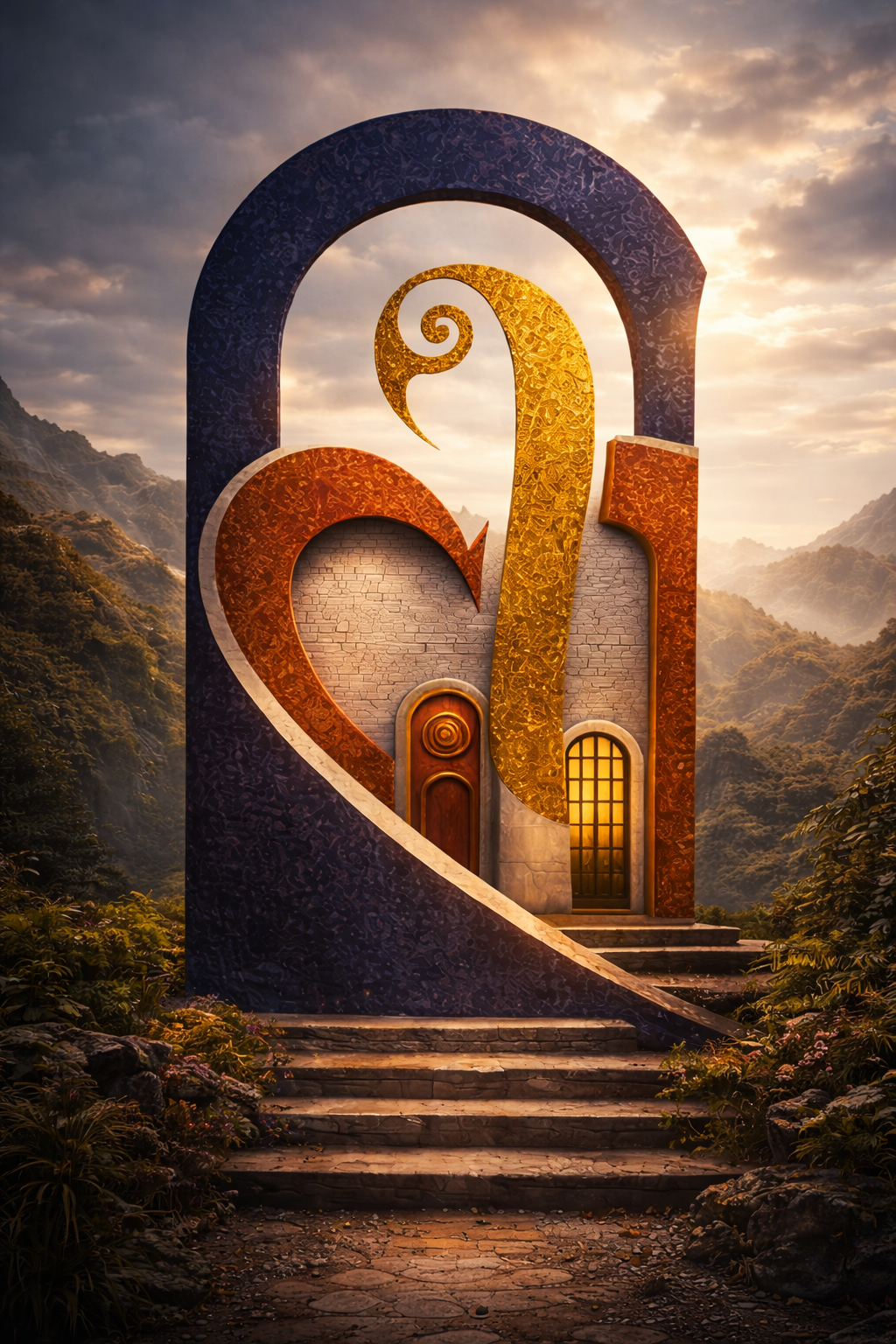
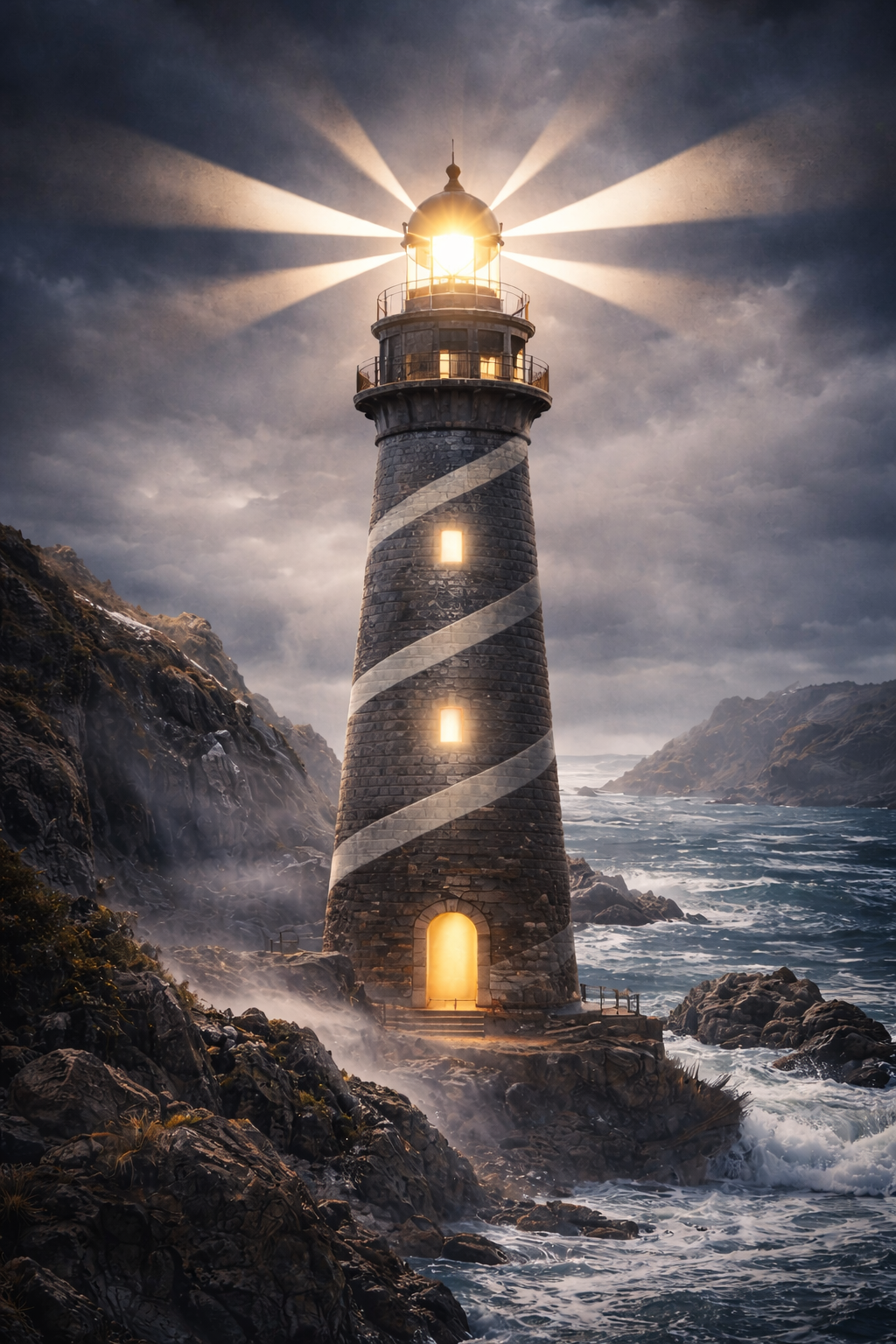
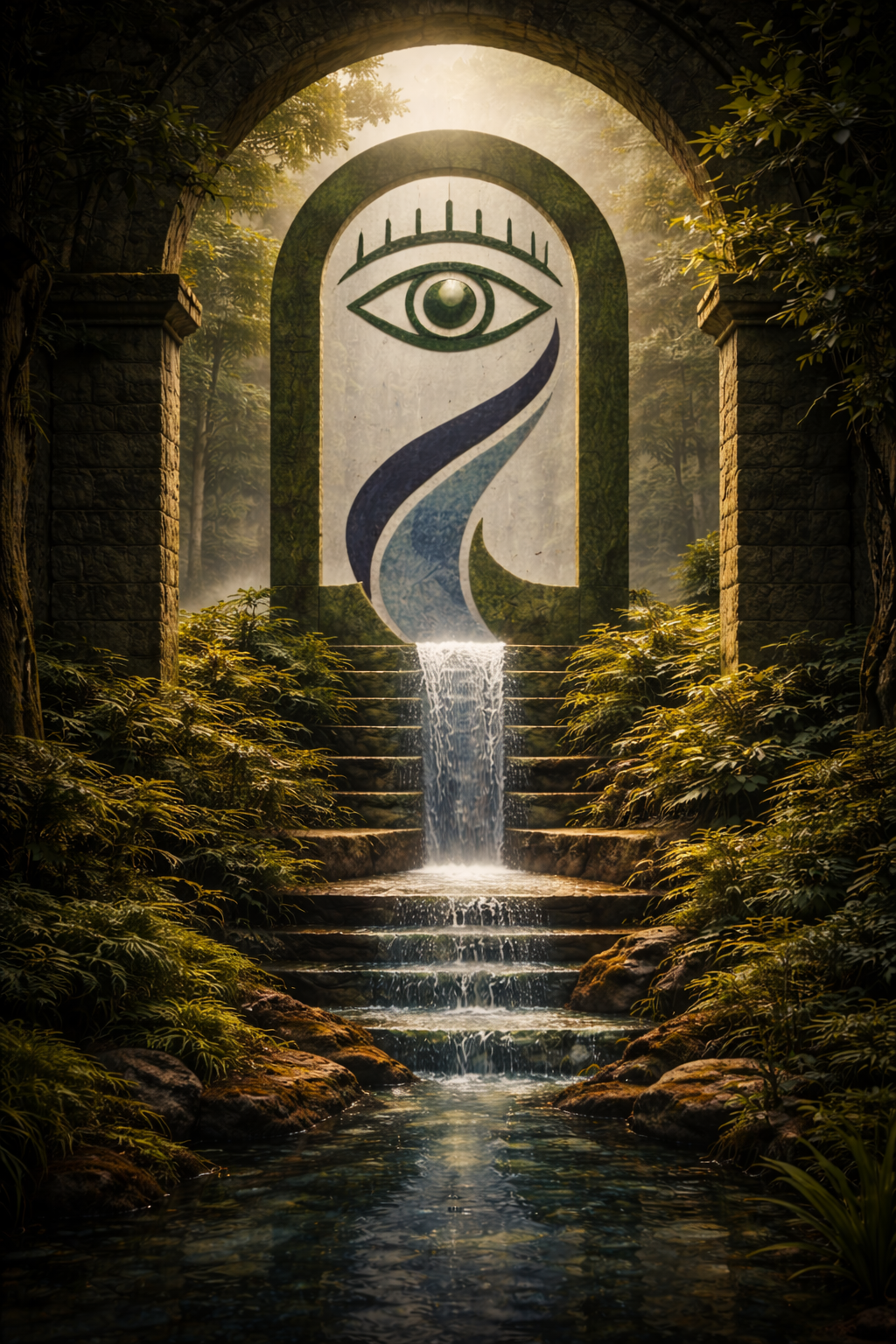
Three sanctuaries. Each one a different kind of witness. Choose the door that calls to you — or stand still long enough for one to choose you.
I
Emotional Architecture
The most intimate room. Works that begin in wonder, grief, or devotion — and end in the question only paint can answer.
Enter →
II
Cultural Archive
Works in conversation with history, icon, and memory. Where a painting locates itself inside a story larger than itself.
Enter →
III
Moral Witness
Where the gaze carries consequence. Works that ask what it means to see something disappearing — and choose to look anyway.
Enter →
For curators, collectors & institutions
The Briefing
The fast read. Who, what, why, how the work is priced and protected — in one page.
The facts, directly →
JT Kluge · Saint Paul, Minnesota
Welcome. I've been expecting you.
The longer way in — the studio, the story, and the thinking behind the work.
Enter the studio →
The Briefing
JT Kluge — Studio
For curators, collectors, and institutions. The fast read — open any question for the full answer.
+
Who is JT Kluge?
An American oil painter whose work explores memory, identity, stewardship, and the unseen systems that shape human experience.
Working from Saint Paul, Minnesota, he creates within a framework he calls Three Sanctuaries: Emotional Architecture, Cultural Archive, and Moral Witness.
Beyond the studio, Kluge serves as EVP of Strategy at Authentify Art and as a ForHumanity Fellow focused on AI ethics and governance. These disciplines inform the work's recurring questions of authorship, provenance, responsibility, and cultural memory.
+
What is the work?
The work uses familiar subjects to explore larger questions about what we value, remember, and leave behind.
The studio is organized around Three Sanctuaries. Emotional Architecture explores personal experience and connection. Cultural Archive examines the icons and objects that define an era. Moral Witness addresses stewardship, environmental change, technology, and responsibility.
Each work belongs to one sanctuary. Together they form a single architecture of inquiry into what it means to be human in a rapidly changing world.
+
Why does the work matter?
The paintings make visible the systems and stories that quietly shape how we live.
Much of what shapes modern life was never intentionally designed. It emerged through accumulation, compromise, neglect, and incentives — systems layered upon systems. Engineers sometimes call such a structure a "kludge": something assembled to function, but never fully understood.
Through painting, familiar subjects become entry points into larger conversations about memory, identity, stewardship, technology, environment, and responsibility. The paintings are not intended to provide answers. They are intended to create space for reflection, discussion, and inquiry. The objective is simple: to help people see what has become difficult to see.
+
Why painting?
Painting gives the work another voice — a physical form capable of carrying meaning across generations.
Painting remains one of humanity's oldest technologies for preserving meaning. In an era defined by speed, replication, and algorithmic mediation, the act of building an image slowly by hand remains significant. Oil painting creates a physical object that resists instant consumption. It asks for attention, rewards repeated viewing, and creates a direct relationship between maker, object, and audience across time.
For Kluge, painting is one voice among several — the visual counterpart to the questions explored through technology, ethics, and systems thinking. The canvas becomes a place where ideas that are difficult to quantify can become visible, felt, and remembered.
+
What distinguishes the work?
The studio combines painting, systems thinking, and stewardship into a single artistic practice.
As an AI ethicist, Kluge studies how socio-technical systems influence human outcomes. As a painter, he explores those same questions through image, symbol, and narrative.
The result is work that functions simultaneously as image, artifact, and conversation — using familiar subjects to reveal larger questions about memory, identity, responsibility, technology, and stewardship.
+
How is AI used in the studio?
AI is used as a research tool, not as the maker of the artwork.
The paintings themselves are created by hand in oil on canvas or linen. AI may assist with research, analysis, writing, or creative consultation — questions of color, composition, historical context, or a work's place in the broader oeuvre — but all artistic decisions remain human-directed.
As a practitioner in AI ethics and governance, Kluge approaches these tools through the principles of stewardship, accountability, and responsible use. The studio makes a good-faith effort to ensure that AI-assisted processes respect authorship, fair use, and intellectual property. The question is not whether a tool exists. It is whether it is used responsibly.
+
How is the work priced?
The studio uses a transparent methodology rather than subjective pricing alone.
Works are valued through the Comparative Affinity Matrix (CAM) — the homework the market usually hides, done in the open. It examines comparable artists, historical context, market positioning, and long-term trajectories, benchmarked against the Masters whose register a work inhabits and the contemporary artists it stands beside.
The objective is not to maximize price. It is to establish a valuation that is fair, consistent, and defensible rather than speculative. Pricing is applied uniformly and does not vary by collector, institution, or circumstance.
+
What accompanies a work?
Every work is supported by documentation designed to preserve its story and provenance.
Each work is accompanied by a Creative Dossier, a Certificate of Authenticity, and registration within Authentify Art's independent record system. The resulting record preserves provenance, exhibition history, publication references, and other relevant facts associated with the work throughout its life.
The objective is straightforward: to strengthen the continuity of information surrounding the artwork so future collectors, curators, researchers, and institutions can engage with a clear and reliable record.
+
How can we engage with the studio?
The studio actively supports collectors, institutions, exhibitions, and loans.
Original works may be available for acquisition, exhibition, institutional loan, and collaborative programming. Some collections are offered only as complete bodies of work, while others are intended for broader public engagement and dissemination. Availability is confirmed upon inquiry.
The studio welcomes conversations with collectors, curators, museums, foundations, and cultural institutions — including virtual studio visits, exhibition partnerships, public programs, and artist appearances.
Begin a conversation.
JT Kluge before A Sunday en face de la Grande Jatte
Welcome. I've been expecting you.
JT Kluge, b. 1969 · Saint Paul, Minnesota
The studio · Saint Paul, Minnesota
Studio space wide shot or video
The studio
Materials in progress Old Holland, palette, canvas
The materials
Canvas detail mid-process, layered oil
The process
JT at work in studio, not posed
The painter
The Record
Every drawer holds a different question.
Seurat gave me the method. Rothko gave me permission to feel it.
The origin of the practice — and why every work begins with a question.
+
The origin of my practice came from Seurat. Standing before A Sunday on La Grande Jatte, I found myself asking the question that would define everything that followed: what were those 47 people on the left side of the canvas actually seeing? That question — unanswerable any other way — sent me to paint.
Each work begins with a Question. One that gnaws at me until it cannot be answered any other way. Through paint. Through canvas.
I found one style to be limiting. Outsiders reach for labels. I reach for the next question. Because each work finds its own register — driven by the story it needs to tell, not by a prescribed method.
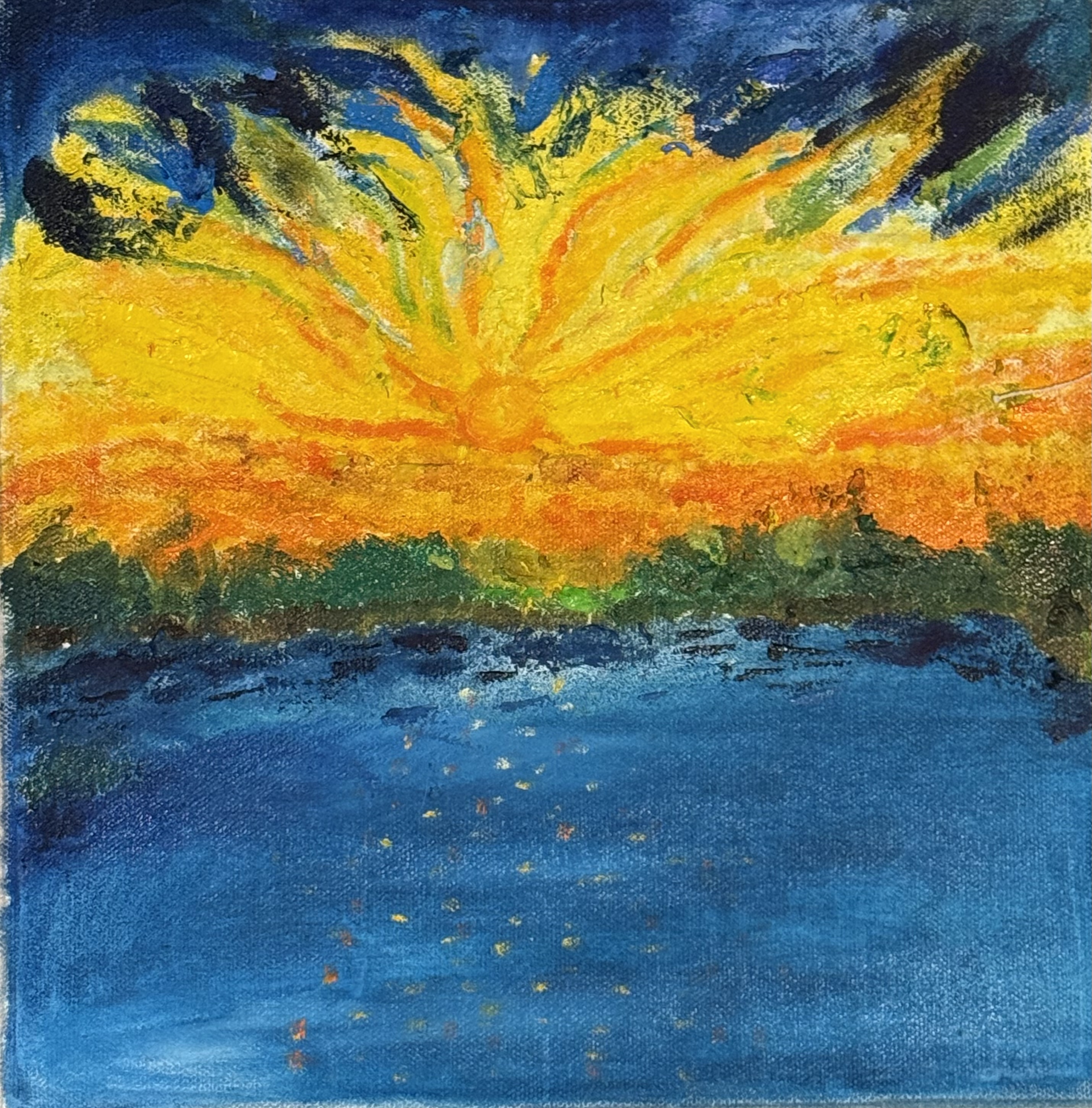
When Gershwin's Rhapsody in Blue brought me to the 1920s, it brought me to Robert Delaunay — a register I had seen but not yet inhabited. The Sunset with Venus began as a color field in my mind. But the collector loved Van Gogh. I found that register — and what came out was such an expression of that sunset that I was, for once, at a loss for words.
A commission may carry the voice of the future collector, because that is the register the work calls for.
Every work belongs to one. Together, they are a complete architecture.
The Three Sanctuaries — why nothing here competes against anything else.
+
The Three Sanctuaries creates distinct spaces where works of varied emotion, meaning, and story can reside without competing against one another. Je T'aime, Ohtani — Ichiban, and The Rising Tide do not compete — each is a keystone for the Sanctuary in which it welcomes you.
To enter one is to step into a space that feels both intimate and vast. Personal, yet universal.
Sanctuary I
Emotional Architecture
A dwelling for the individual soul — uniting the necessity of quiet refuge with the power of nostalgic memory and the structural forms of love. Visual monasteries, designed not to capture attention, but to reward it.
Je T'aime · Rhapsody in Blue · The Chicago Lighthouse · A Sunday en face de la Grande Jatte · The Girl and Her Giraffe
Sanctuary II
Cultural Archive
Engages the shared narratives societies tell about themselves. Athletic figures and design masterpieces treated with the gravity of classical portraiture — elevated from the moment into permanent record.
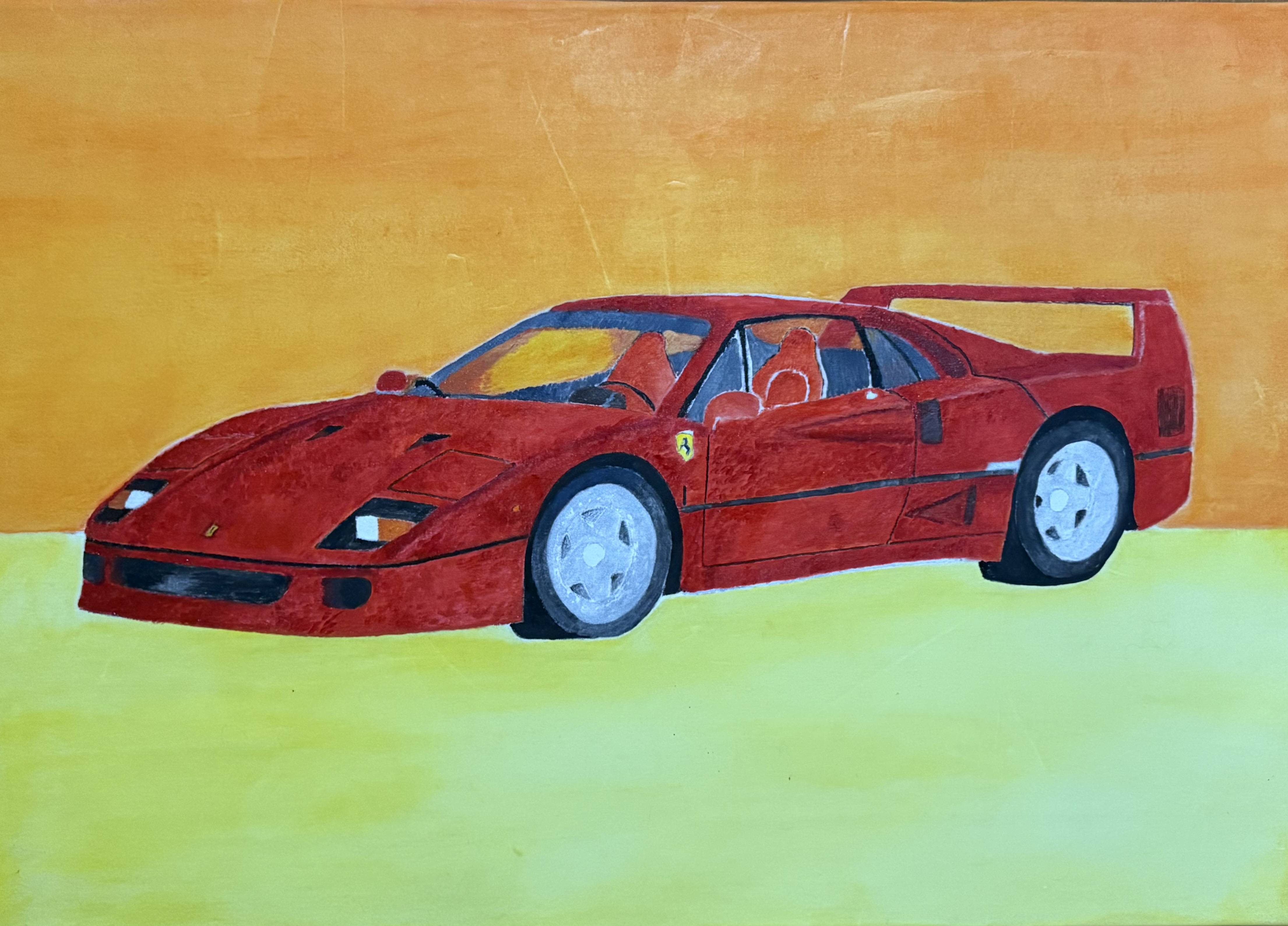
Ohtani — Ichiban · Mickey Mantle · Ferrari: Dawn of the Supercar
Sanctuary III
Moral Witness
Bears witness to systemic and environmental consequence without losing aesthetic integrity. These works do not preach. They preserve. They create spaces where difficult things can be encountered without feeling lectured.
Endangered Species '26 · Good Trouble · The Rising Tide
Every original work arrives with its complete architecture of meaning.
The Creative Dossier™ — twelve narrative texts, the work's second skin.
+
Every original work arrives with its Creative Dossier™ — twelve distinct narrative texts that give a collector or curator the complete architecture of meaning: the philosophical genesis of the work, its curatorial placement within the Three Sanctuaries, and the language to speak about it with authority in any room, at any stage of acquisition or exhibition.
This is not supplementary material. It is the work's second skin.
What is real is recorded. What is recorded is protected.
Authentify Art — provenance, certification, and resale royalty protection.
+
Every work is registered on Authentify Art — assigned a unique identifier secured to the canvas in archival method. The digital experience, Certificate of Authenticity, Creative Dossier™, and Comparative Affinity Matrix all live here, accessible to the collector at every stage of the work's life. This is collectively called being Authentified™.
The protections are designed for both of us.
For the artist: Authentify Art creates an immutable record of what is original, what is mine, and what cannot be legitimately reproduced or sold without my consent. In an era when large language models are trained without regard for copyright — when an algorithm will replicate what took years to develop and offer it without credit — that record matters.
For the collector: resale royalty protections travel with the work. As it is my intent that these paintings appreciate in value, the protections ensure that appreciation remains yours — that no transaction can strip the work of its provenance, its attribution, or the financial interest you hold in it.
What is real is recorded. What is recorded is protected. What is protected holds its value.
Pricing original work requires honesty about where it is headed.
The Comparative Affinity Matrix — how primary prices are reasoned, not guessed.
+
The Comparative Affinity Matrix grounds that conversation. For each work, I identify the Masters and blue-chip artists whose register it mirrors — artists whose methods informed the painting — then calculate backward to where those values stood twenty years ago. Current mid-tier and blue-chip contemporary peers provide the modern comparison. The result is a referenced, reasoned anchor for primary prices.
I do not paint hundreds of works a year. Dozens, perhaps. The scarcity is real, the emotional weight is intentional, and the materials are uncompromising — Old Holland oils and Claessens linen are what someone two hundred years from now will appreciate. The Comparative Affinity Matrix does not inflate that. It reflects it.
This framework grew out of Creation vs. Extraction, the founding white paper behind the Five Capitals model referenced throughout the Moral Witness sanctuary — the same lens applied across every body of work I make.
A collaborator without ego or judgment.
AI in the studio — fair use, respect, and where human judgment stays irreplaceable.
+
Artificial intelligence is a studio tool — available at any hour. It is the just-in-time consultant that helps me translate what exists in my head into something I can actually paint. Color relationships. Compositional logic. The specific light in a memory that I know but cannot yet name.
My works are grounded in fair use — in conversation with Masters who have moved beyond their time, and in respect for their creative product. Contemporary artists provide inspiration and living context. AI helps me navigate between what I envision and what the canvas can hold, always in service of the work and in respect of those whose shoulders it stands on.
The painter, the strategist, and the ethicist are not separate identities.
Beyond the studio — three directions, one curiosity.
+
Studio Practice
Painter & Visual Architect
Original oils on Claessens linen. The Three Sanctuaries. Work built to last emotionally, materially, and narratively across a lifetime of sustained looking.
Authentify Art
EVP Strategy & Corporate Development
Building the infrastructure that protects artists and collectors in an era when authenticity itself is under pressure. Digital provenance, market integrity, art and technology.
Ethicist & Writer
AI Ethicist & Cultural Critic
Who owns an image. What constitutes authorship. Where human judgment remains irreplaceable. The same questions that run through the studio, applied to what technology is forcing on culture.
They are the same curiosity, applied in three directions.
A studio that cannot sustain itself cannot make work that endures.
Echoes — what the practice leaves behind, and why it matters.
+
Every serious studio practice faces the same quiet pressure: the cost of materials, the time between sales, the gap between what a work is worth and when that value is recognized. Most artists absorb that pressure silently. I've chosen to make it visible instead.
Old Holland oils and Claessens linen are uncompromising materials — chosen because someone two hundred years from now will still be able to read what they hold. But they are not cheap, and a studio built on them must find ways to sustain itself without diluting the integrity of the larger work.
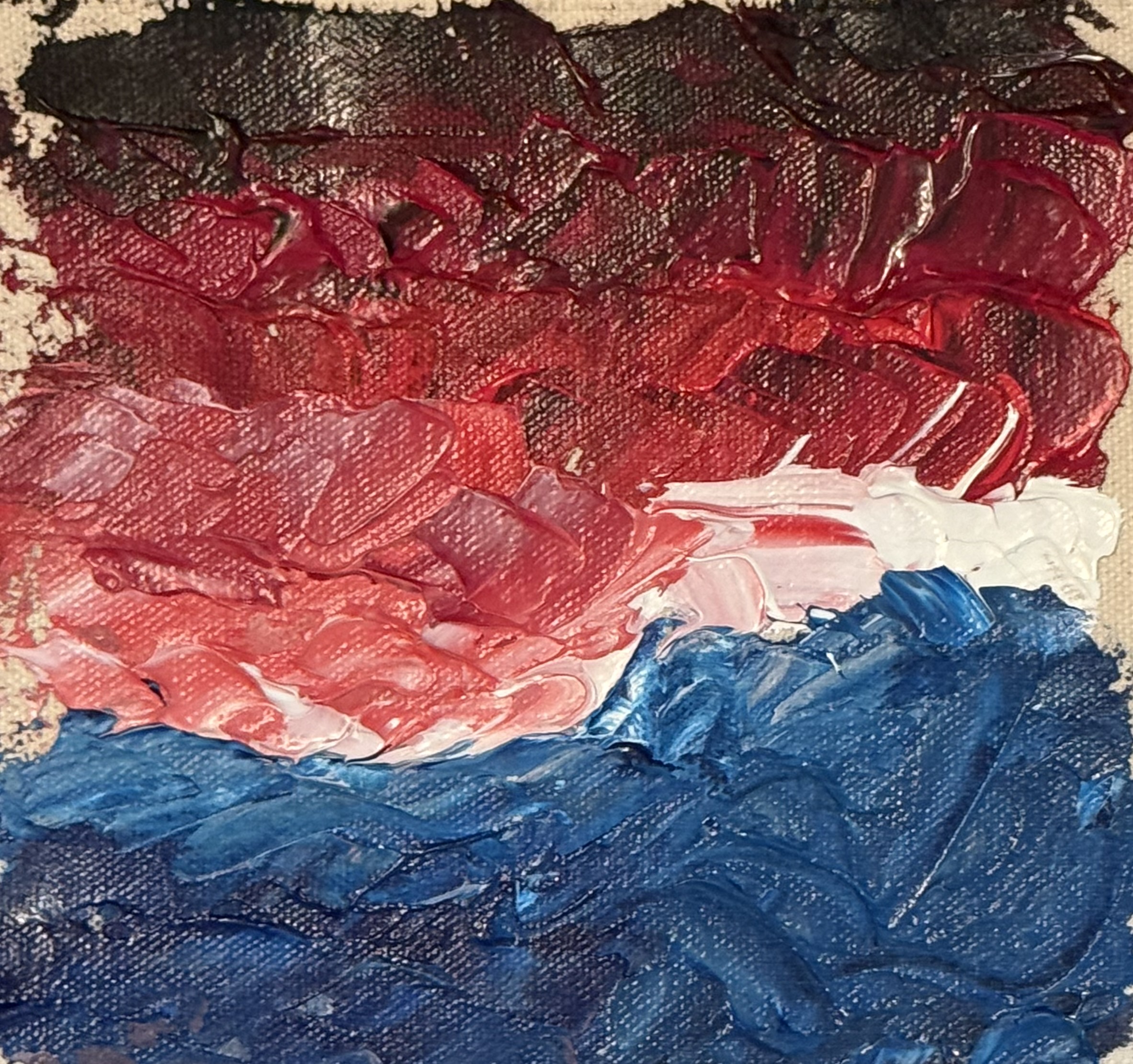
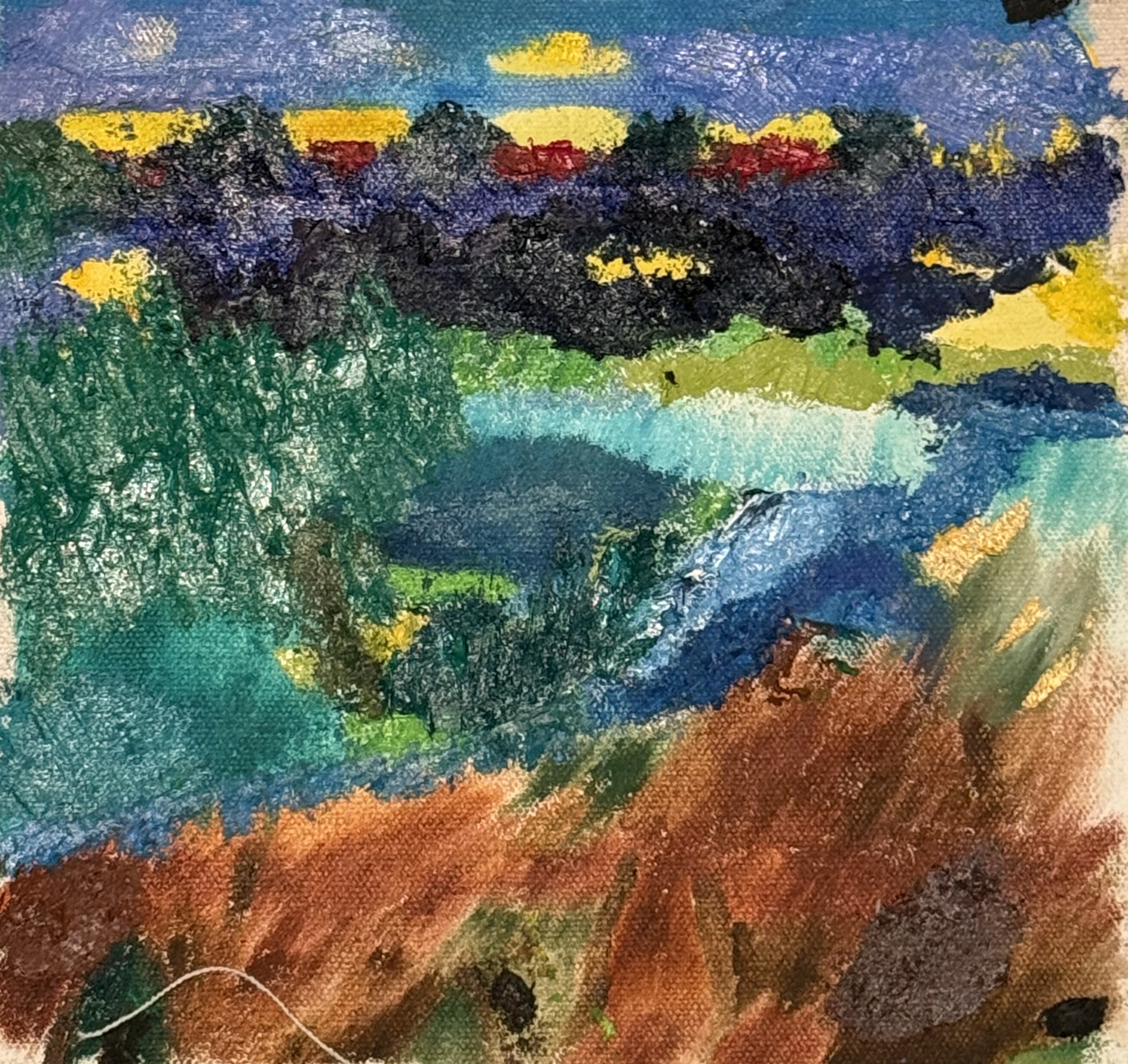
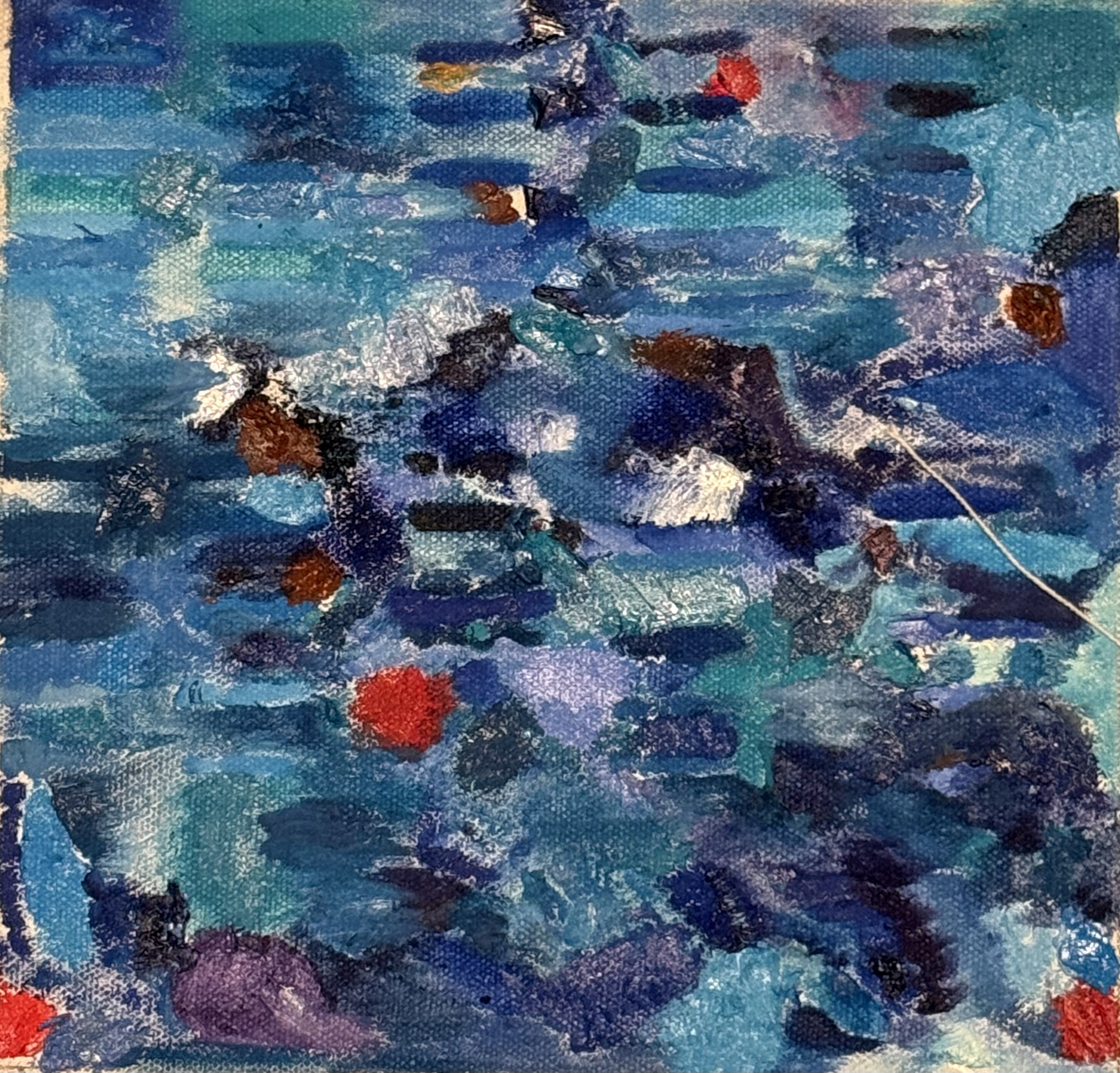
Echoes are what the practice produces between paintings. The excess paint from a session — the color trials, the palette knife tests, the residue of a day's decisions — transferred to small linen before it is lost. Each one is informed by the same eye and the same hand that made the larger work. Nothing here is accidental. Nothing in a deliberate practice is truly waste.
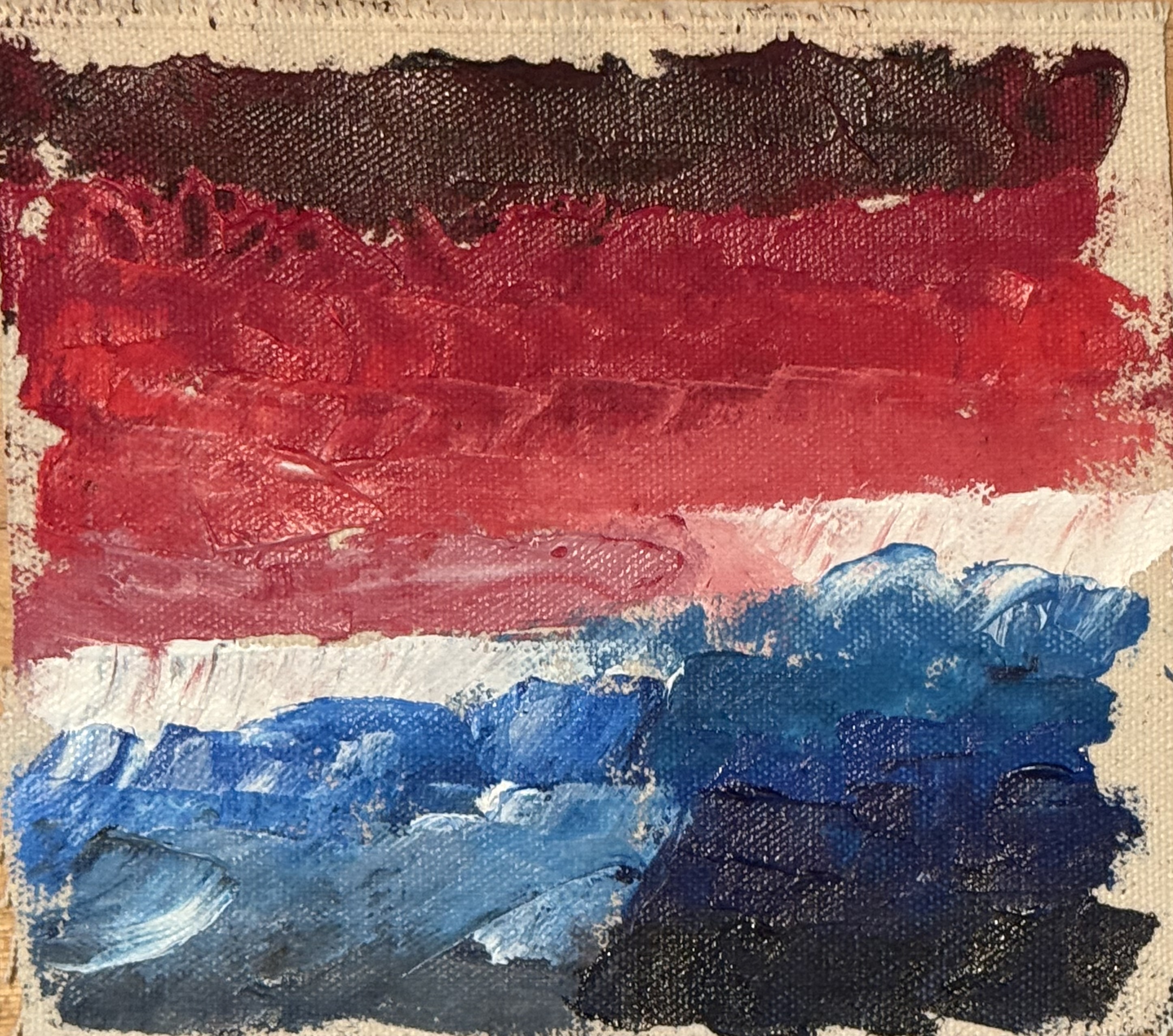
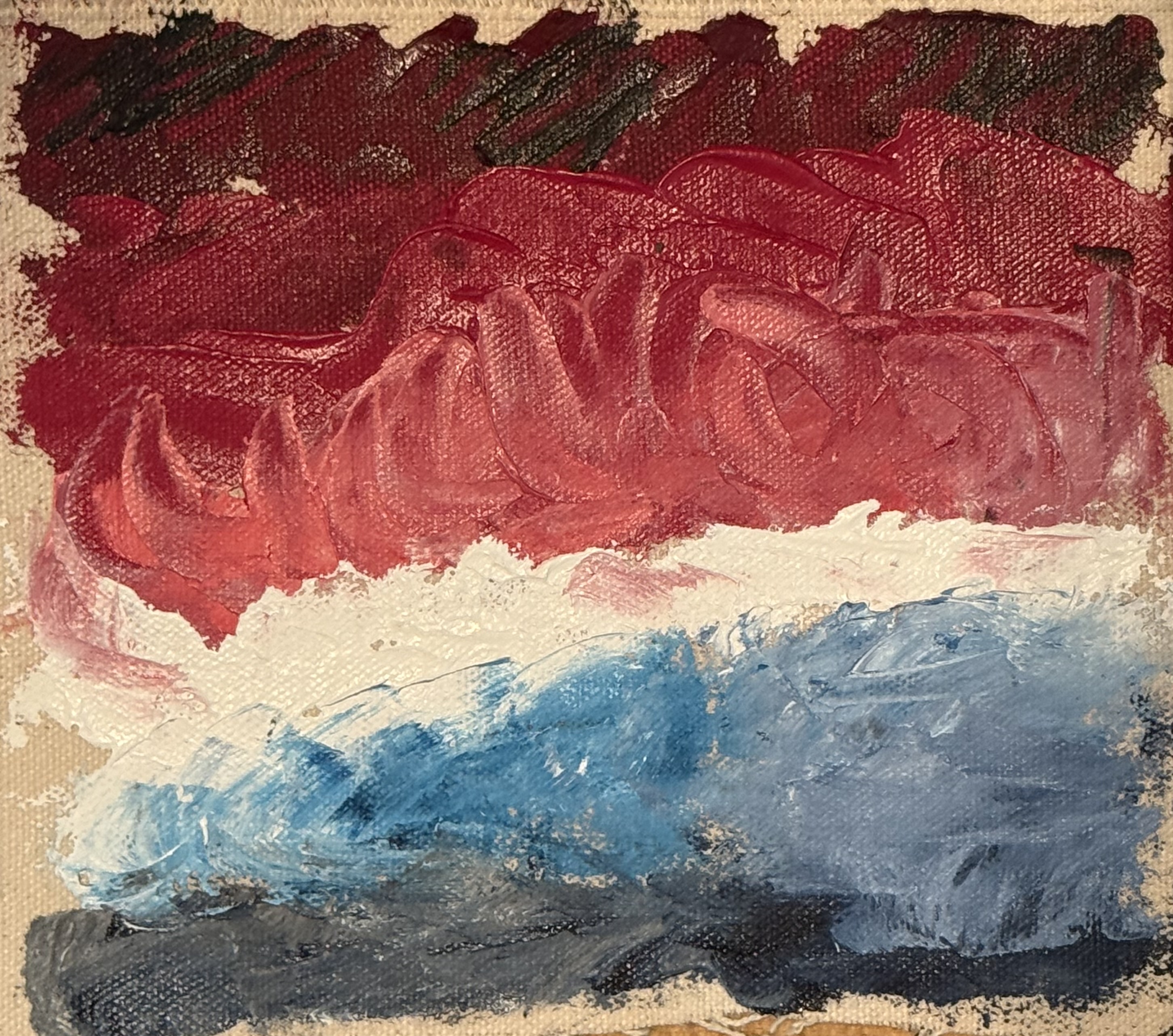
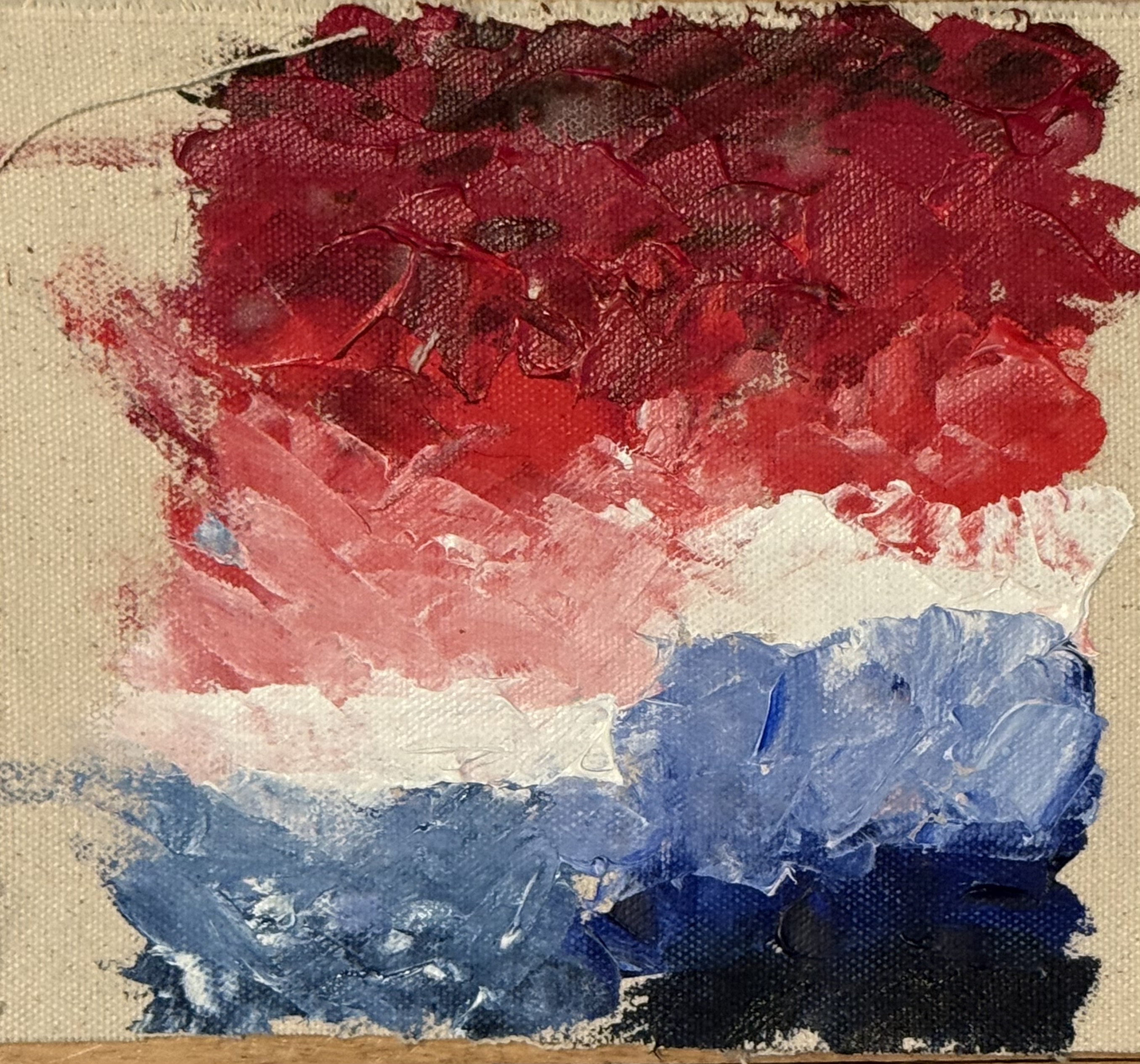
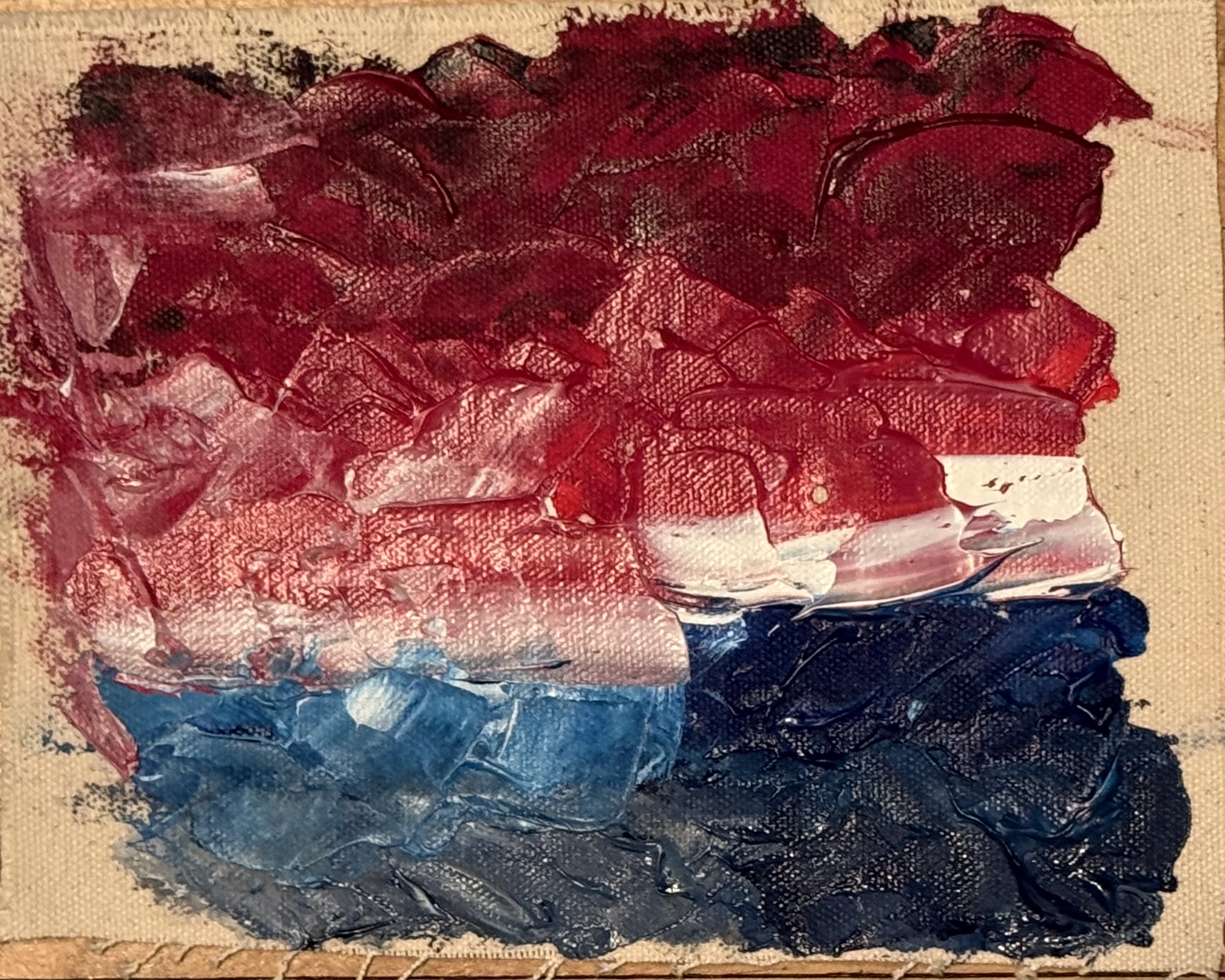
Within Echoes lives a group of five small-format works in red, white, and blue — made from the palette of the Good Trouble series. They are priced at $250 each, in honor of the Good Trouble caused in Christ Church and Independence Hall in 1776, and of John Lewis and Cory Booker's longest standing hold on the Senate floor. A small work. A long memory.
Each Echo and each Ripple arrives with its own Certificate of Authenticity, registered through Authentify Art. Every original Kluge collector starts somewhere.
Collector guidance, commissions, and studio inquiries.
From the Studio · Kluge Studio · Saint Paul
Echoes
These are what the practice leaves behind. Each work is made from the excess paint of a larger canvas — informed by the same eye, the same hand, the same deliberate methodology. Nothing in a serious practice is truly waste.
Every work arrives with a Certificate of Authenticity registered through Authentify Art.
Good Trouble Echoes — $250 each
Good Trouble Echo i
Good Trouble Echo i
$250
Good Trouble Echo ii
Good Trouble Echo ii
$250
Good Trouble Echo iii
Good Trouble Echo iii
$250
Good Trouble Echo iv
Good Trouble Echo iv
$250
Good Trouble Echo v
Good Trouble Echo v
$250
Echoes — $1,000 each · Original oils on linen
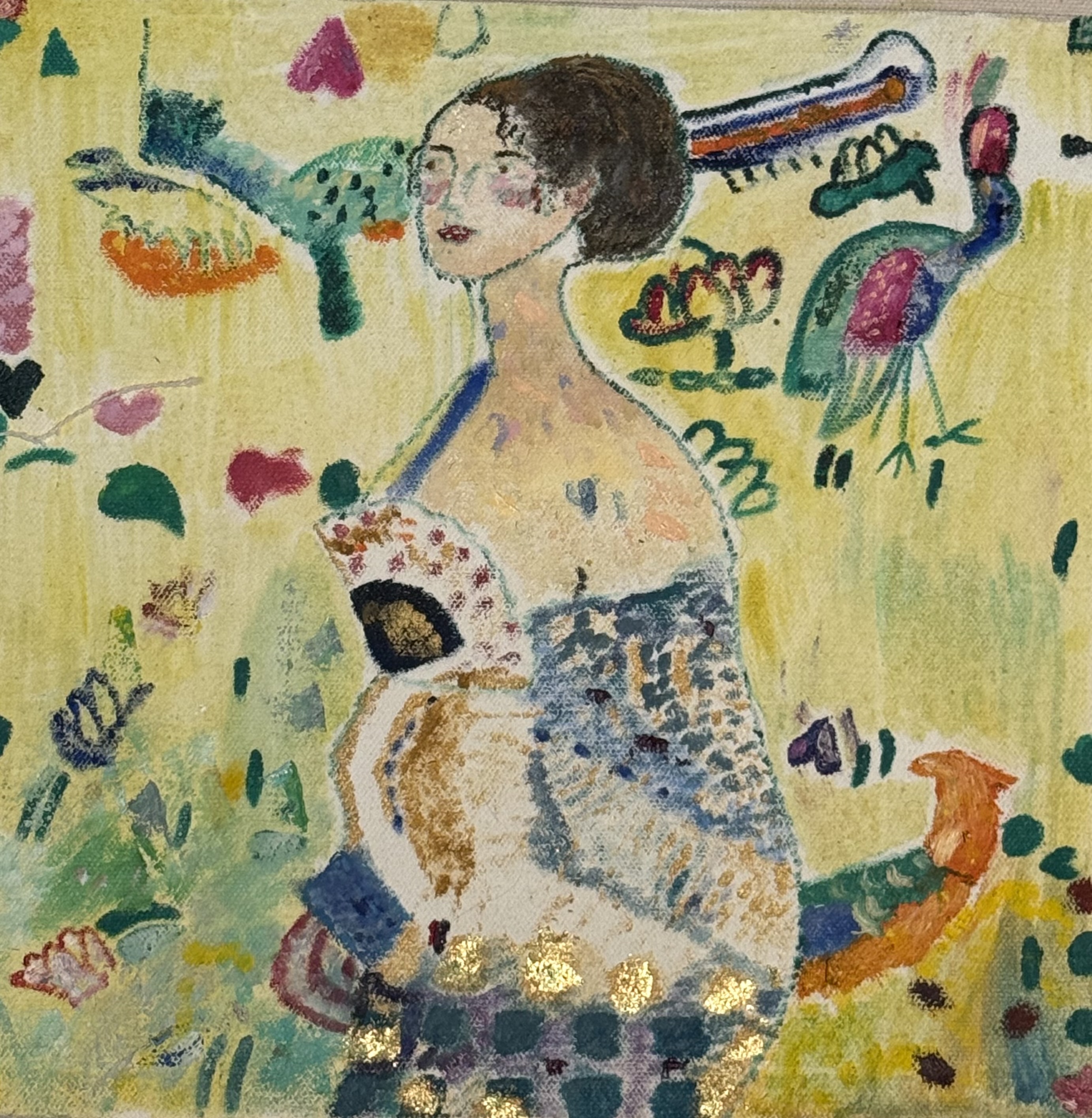
Lady with Fan Echo
Lady with Fan Echo
$1,000
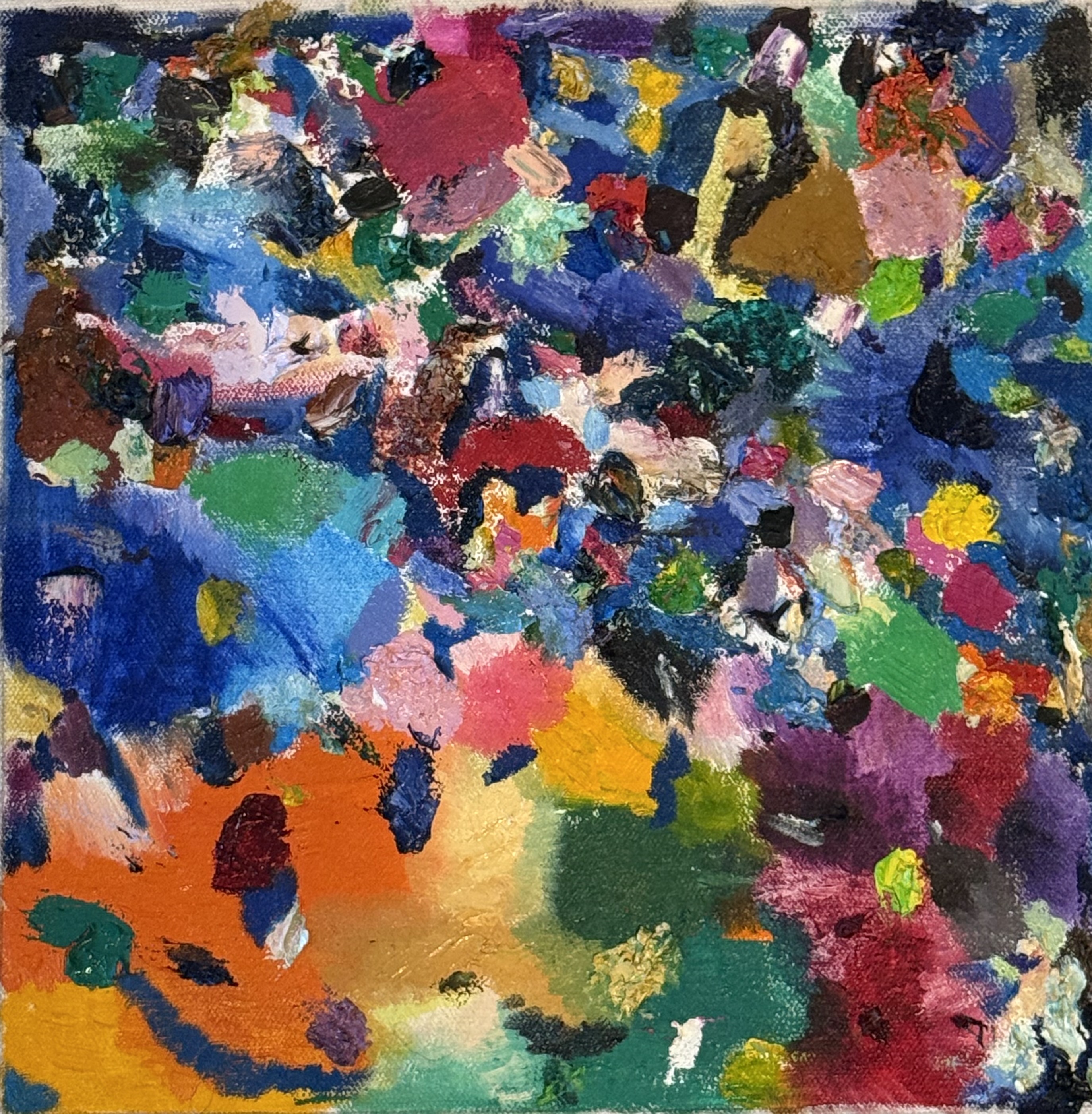
The Space Between Echo
The Space Between Echo
$1,000
Sunset with Venus Echo
Sunset with Venus Echo
$1,000
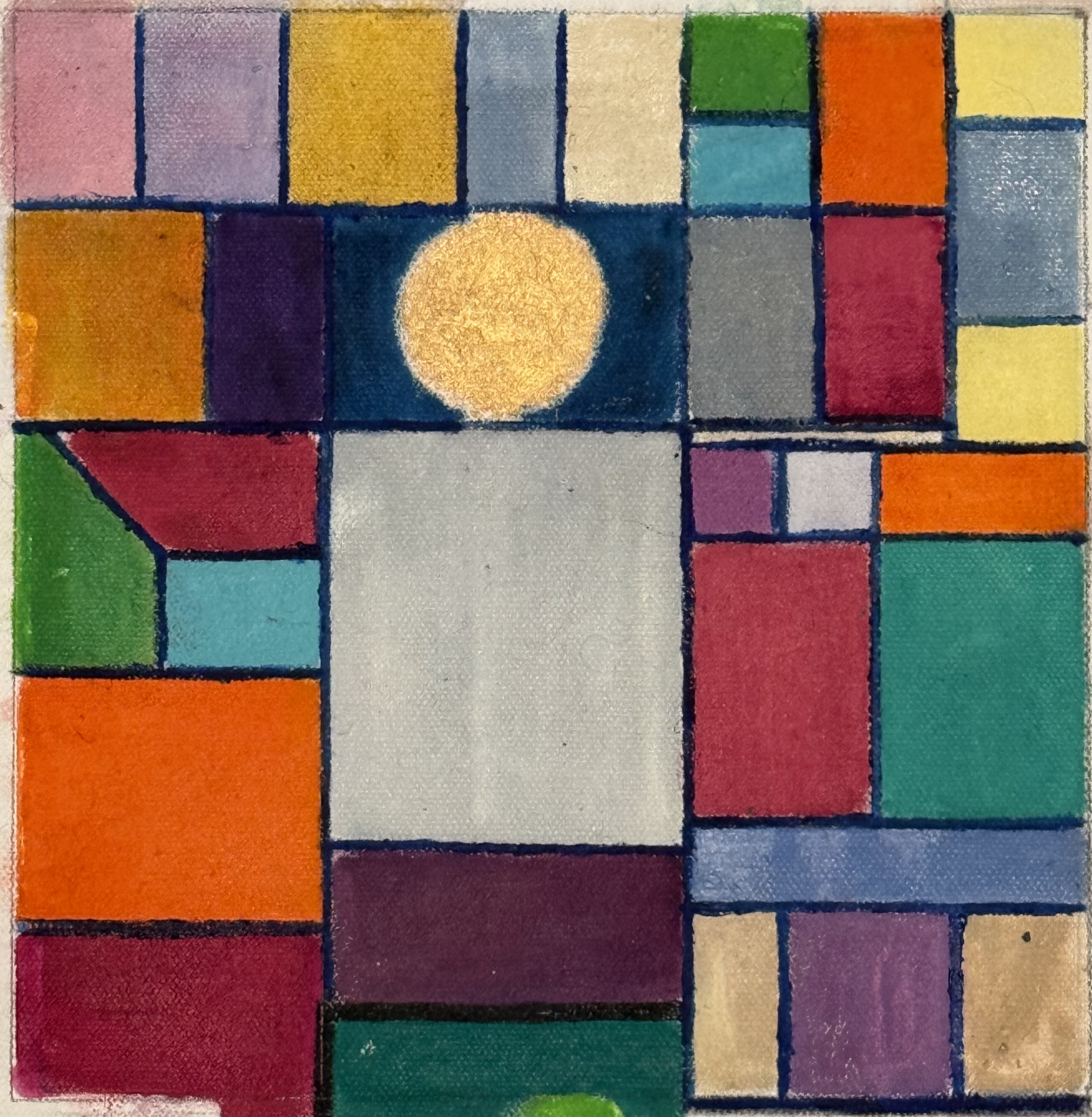
Mondrian Echo
Mondrian Echo
$1,000
Ripple
Ripple
$1,000
Olive and Orange Echo
Olive and Orange Echo
$1,000
ΑAbout
To see is to accept responsibility.
Sanctuary III · Moral Witness
There is a difference between looking and witnessing.
Looking is passive — we scan, we scroll, we move on. Witnessing is a commitment. It says: I was here. I saw this. I will not pretend otherwise.
The works inside this sanctuary are painted for what disappears, what rises, and what must be fought for. Every mark I make in Old Holland oils on Belgian linen is an act of refusal — a refusal to let urgency pass unremarked. The record is made.
Three bodies of work live here, each its own gallery. Endangered Species '26 witnesses the vanishing of the living world. A Rising Tide witnesses what we have built — and who gets left behind by it. Good Trouble witnesses the cost of standing up.
Look closer ↻
What you're looking at
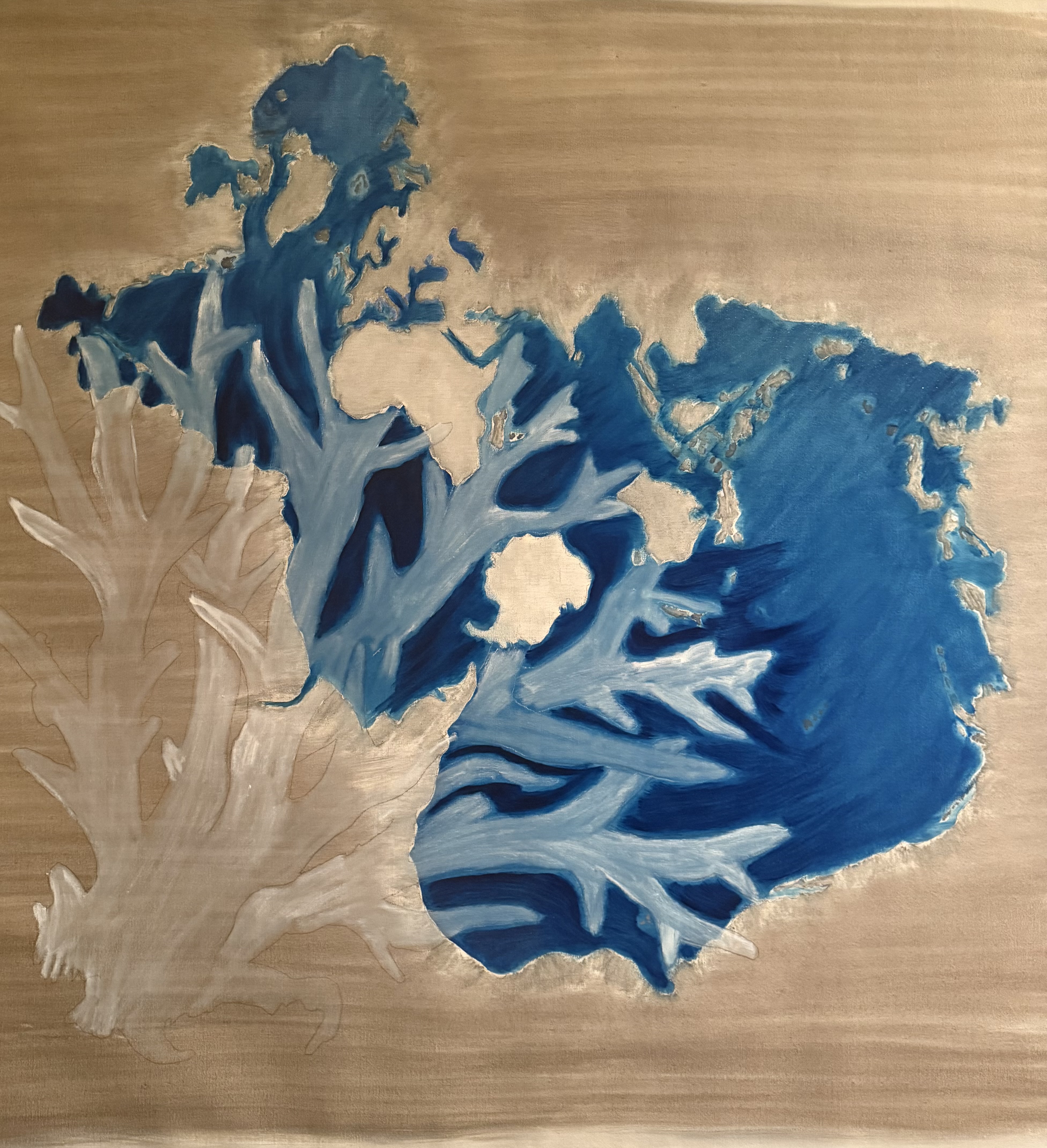
Branching staghorn once built the Caribbean's reefs. Disease, warming, and acidification have erased most of it in a single human lifetime.
A reef is not scenery. It is a nursery, a seawall, and a food system — and it is vanishing as we are distracted.
Moral Witness · Featured Work
Staghorn Coral
Stewardship
The originals are never disaggregated
The ES'26 suite of fifteen works is offered only as a complete collection. No individual sale. The works exist together or not at all.
Conservation
Proceeds structured for the wild
Print edition proceeds flow to conservation partners under the Stewardship Contribution Covenant. The art funds the survival of its subjects.
Authenticity
Provenance by design
Every work carries a Certificate of Authenticity, with Authentify Art provenance infrastructure embedded at origin.
Individual works
Every work carries a price.
Each is set through the Comparative Affinity Matrix — benchmarked against the Masters whose register the work inhabits and the contemporary artists it stands beside, then tracked against mid-market and blue-chip trajectories over ten and twenty years.
The price is the same for everyone. It is not set by who you are, or by what a room thinks you can pay.
The full valuation and Creative Dossier travel with each work, registered on Authentify Art. Ask, and I will walk you through both.
Moral Witness › Endangered Species '26
Endangered Species '26
The Eyes Are Upon You
15
Works in suite
38²
Inches each
5
Edition tiers
The Vanishing
The vaquita: fewer than ten remain.
The staghorn coral: collapsed across 80% of Caribbean reefs in a single generation.
The black rhino: 96% of its population gone in fifty years.
We are not watching numbers fall. We are watching species end.
This project does not address symptoms. It rebuilds the system.
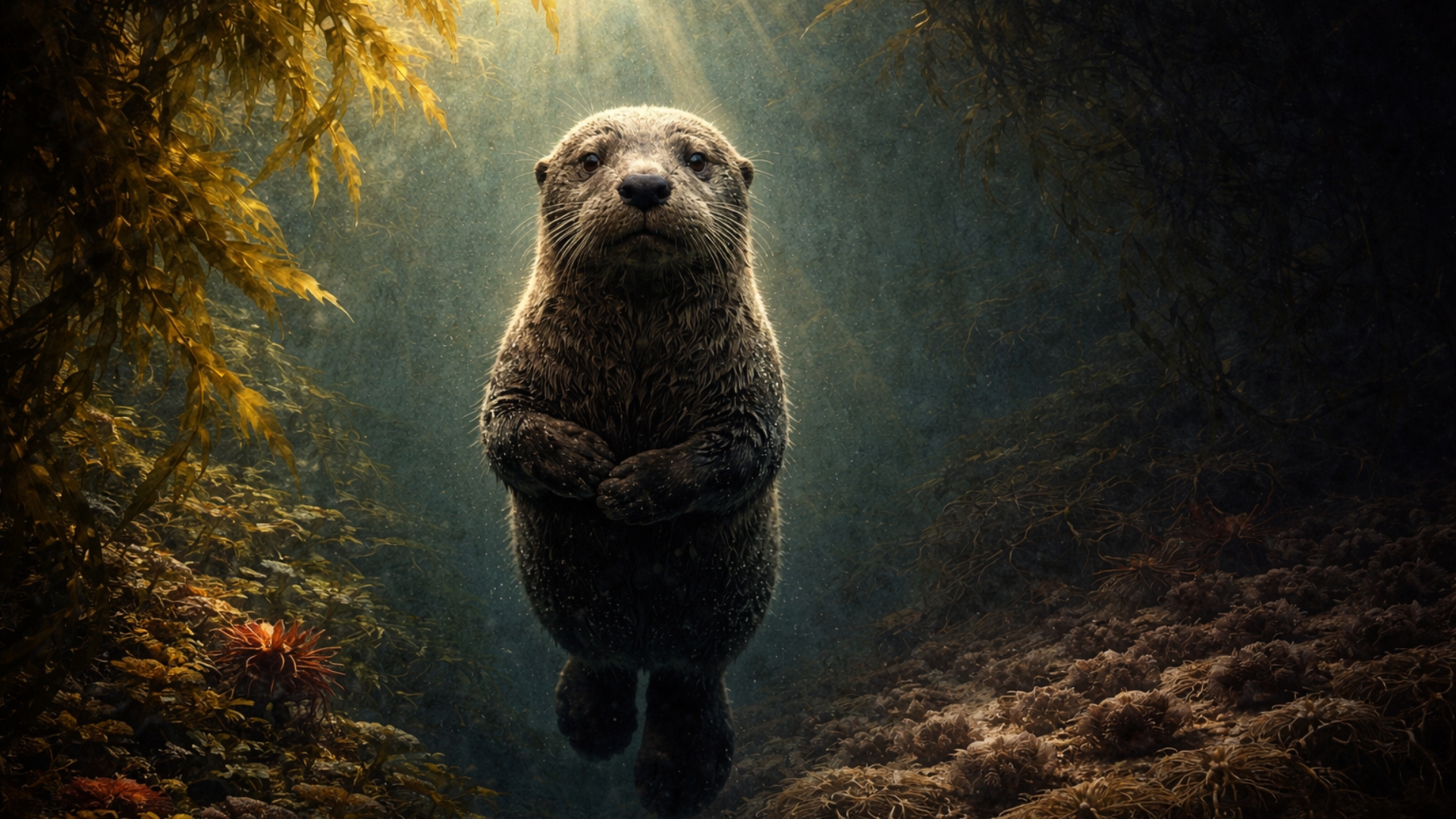
And when a species ends, the ecosystem built around it does not pause and wait. It changes — sometimes catastrophically, sometimes invisibly, always permanently. The otter you see on this page is not a symbol. It is a case study. When hunters nearly eliminated the otter from Pacific coastal waters, sea urchin populations exploded unchecked. Kelp forests — the nurseries of the ocean — were consumed. Fisheries that coastal communities depended on for generations collapsed with them. The otter's near-vanishing was not an animal story. It was a food system story. An economic story. A human story.
We are connected to these systems whether we choose to acknowledge it or not. Our neighborhoods, our food chains, our water, our atmosphere — all of it runs through ecosystems we have never visited and species we have never seen. Their destruction does not stay where it begins.
The crisis is not that species are disappearing. It is that we have learned to look away while it happens — and call that looking away something more comfortable, like progress.
JT Kluge, b. 1969 · Saint Paul, Minnesota
You are witness to my curiosity.
That is not an invitation to admire. It is an invitation to follow — through the formal questions that begin each work, through the emotional logic that structures each series, through the deliberate methodology that transforms curiosity into painting and painting into story.
These creatures are still here. Look at them before they are not. Each canvas is built through Rothko's color field logic and Seurat's pointillist discipline. These are not illustrations. They are encounters.
No. 01 of 15
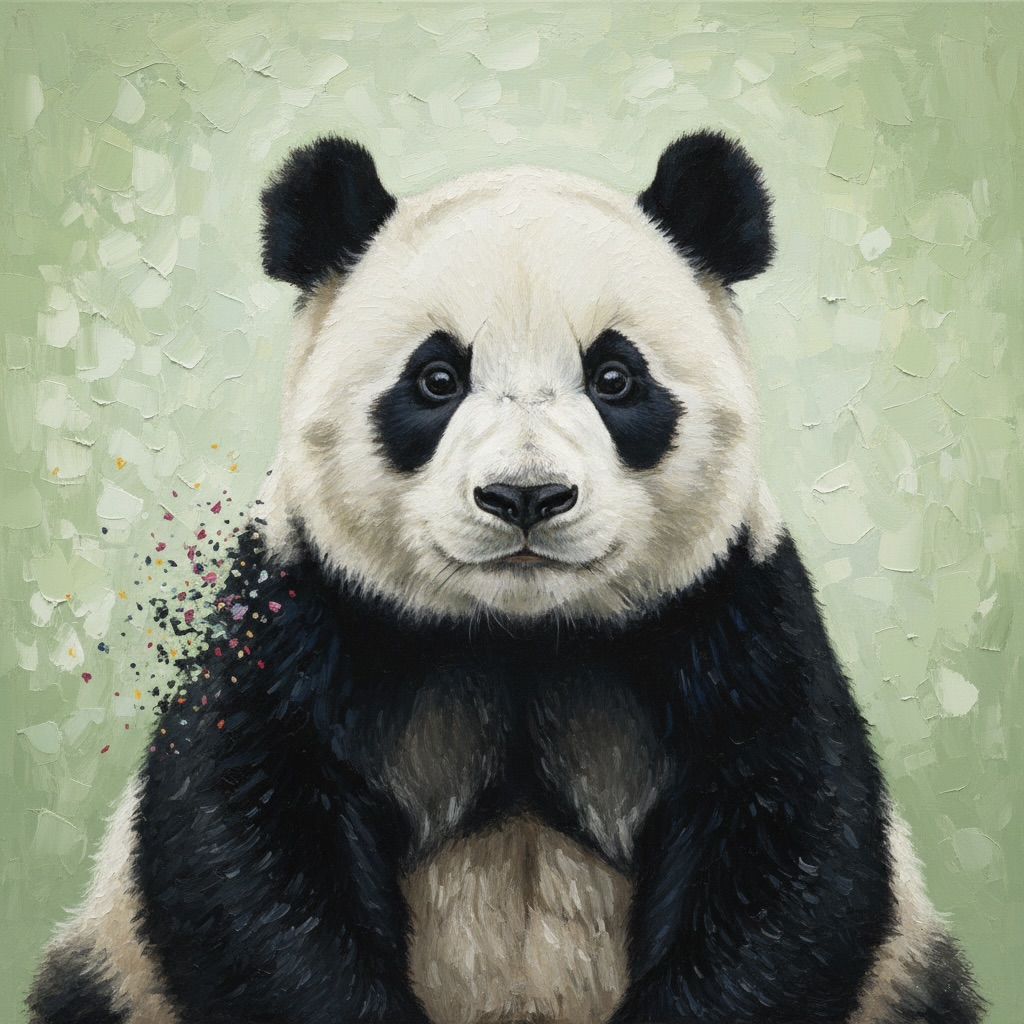
Giant Panda
Bamboo Green · East Asia · Vulnerable
The first eye. The one that started everything. I rendered it in Ivory Black, Raw Umber, and Flake White — colors that have not changed since the Old Masters. The animal has been here much longer than we have.
No. 10 of 15
Vaquita + Calf
Sea of Cortez Turquoise · Mexico · ~10 remain
Fewer than ten left in the world. I painted this eye knowing that by the time someone sees the finished work, that number may be smaller. The paint dries. The population does not recover.
No. 15 · Closing Work
Human Eyes
38 × 38 in. Old Holland oils on Belgian linen
Human Eyes
Yellow Aura→Rainbow · Universal · The closing indictment
Not an animal. Us. The series ends where it was always heading — with the species most responsible for the others' disappearance. Every prior eye in this suite was an animal's. This one is the viewer's own. The gaze turns.
All fifteen works
01
Giant Panda
Bamboo Green · East Asia
02
Staghorn Coral
Cobalt Blue · Ocean
03
Panamanian Golden Frog
Yellow→Red→Purple→Black · Central America
04
African Elephant
Emerald Green · Africa
05
Tiger
Gold→Orange→Red · Asia
06
Blue-throated Macaw
Sky Blue/Golden · Bolivia
07
Hawksbill Turtle
Turquoise Blue · Ocean/Global
08
Black Rhino
Burnt Amber→Deep Plum · Africa
09
Polar Bear
Prussian Blue/Ice · Arctic
10
Vaquita + Calf
Sea of Cortez Turquoise · Mexico
11
Golden Lion Tamarin
Deep Rose→Magenta Violet · Brazil
12
Rusty Patched Bumblebee
Yellow→Orange→Deep Red · N. America
13
Emperor Penguin
Ice White/Glacier Blue · Antarctic
14
Pangolin
Warm Amber→Raw Umber · SE Asia
15
Human Eyes
Yellow Aura→Rainbow · Universal · Closing work
Lineage
In 1983, Andy Warhol painted ten endangered species and turned conservation into cultural iconography. Forty years later, the question has changed. Representation is no longer enough. ES'26 extends that lineage — retaining the weight of the black rhino, the African elephant, the giant panda — while opening toward what stands at the edge now: the Panamanian golden frog, the rusty patched bumblebee, the golden lion tamarin. Warhol asked us to notice. This asks what we do next.
"There is no separation between biodiversity, the human food system, and our own survival."
Culture to Recovery
The work does not ask for a donation. It asks for a steward.
Cultural capital does not stay cultural. A painting sold becomes funding. Funding deployed becomes field work. Field work, sustained, becomes measurable recovery — not as metaphor, but as a tracked, accountable process.
Culture→Capital→Field→Recovery
Recovery is measured the same way I measure value everywhere else in my work — across five capitals, not one.
Financial
Capital deployed and returned
Institutional
Partnerships, governance, trust
Social
Communities sustained, not displaced
Natural
Species, soil, ecosystem function
Human
Knowledge, dignity, livelihood
Regenerative Agriculture
Soil, pollinator systems, food access
Field Operations
Direct funding to frontline conservation
Stewardship Endowment
A permanent fund for community-led regeneration
One Seat
The Founder Guardian
A single seat. The Founder Guardian holds one original from the collection — and commissions a sixteenth: a new species, of their choosing, painted into the series and held by them alone. A second circle, Patron's Choice, offers five seats holding the full giclée set of fifteen alongside one original of their choosing. This is not acquisition. It is alignment: a species and the systems that sustain it, held in trust by someone willing to stand behind it.
If you've followed this far, you already understand what this is. Let's talk.
The Economy of Protection
This is not charity. It is infrastructure.
David Attenborough observed that anything you cannot do forever is by definition not sustainable. We have allowed others to strip away the very systems that allow our planet — and our own survival — to continue. Their vanishing is the announcement of ours. That is why the fifteenth work in this collection is not an animal. It is a human eye.
The Five Capitals — Origin
Creation vs. Extraction is the founding white paper behind the Five Capitals framework referenced throughout this collection — the same lens applied across every body of work I make.
Companion White Paper · Coming Soon
"What Happens If I Don't?" — A companion white paper examining ecosystem collapse, cascade consequence, and the cost of inaction.
These paintings are not memorials.
They are a demand.
Edition architecture
Founder
Founder Guardian
Inquire$5M · 1 seat
Patron
Patron's Choice
Inquire$1M · 5 seats
AP
Artist Proof
Held by the artist
NE
Numbered Edition
Inquire$140K · 100 sets
Poster
The 20 Eyes
Inquire$150–250
"Their exclusivity is structural and personal."
Moral Witness › A Rising Tide
A Rising Tide Anchored Souls
Eleven Works · Old Holland Oils on Belgian Linen
"A rising tide lifts all boats" is a promise, not a fact. This series tests that promise against forty thousand years of human history — from the negative handprints of cave painters who took only what they needed, to a sine wave arcing toward a singularity we cannot yet see past. Each work claims a different art historical language — surrealism, cubism, color field, and more — and turns that language against the question of who rises and who is left holding the weight. The wave is constant. The current beneath it is not.
11
Works in series
40K
Years spanned
Work I of XI
Cave Art painting in progress
Old Holland oils on Belgian linen
The Birth of Harmony
Cave Art · The series opens in necessity
Before abundance, there was only necessity. The negative handprints — both ancient and modern — whisper of survival, where nothing was taken beyond what was needed. Have we lost that balance?
Work VI of XI
Cubism painting in progress
Old Holland oils on Belgian linen
The Masquerade of Man
Cubism · Identity fractured and reassembled
A face fragmented, a reflection uncertain. Are we who we claim to be, or merely what others expect? This work dissects the duality of self — man as both performer and spectator. Stripped of artifice, what remains?
Work IX of XI
Color Field painting in progress
Old Holland oils on Belgian linen
The Weight of Gold
Color Field · Wealth rendered as gravity
A field of gold, luminous and commanding. A deep blue sine wave cuts across its brilliance. Below, a darkness looms. In a world obsessed with accumulation, what do we truly hold?
All eleven works
I
The Birth of Harmony
Cave Art
II
Enough is Never Enough
Surrealism
III
The Surge and the Abyss
Abstract
IV
The Meritocracy of Wealth
Pop Art
V
Gilded Cage of Wealth
Impressionism
VI
The Masquerade of Man
Cubism
VII
The Tides of Fortune
Japanese
VIII
Stairway to _________
Mondrian
IX
The Weight of Gold
Color Field
X
Rising Tides, Anchored Souls
Diptych · Penultimate
XI
Man's Singularity / J-Curve Event
Futurism · Closing work
Status
A Rising Tide — Anchored Souls is conceived as a complete exhibition suite, not a series sold piece by piece. The eleven works are intended to travel and be shown together. Curatorial inquiries, institutional loan requests, and exhibition proposals are welcome.
"A rising tide lifts all boats — unless your boat was never the kind that floats."
A flag that can be hung either way is asking you a question.
Good Trouble · Old Holland Oils · Reversible Mount
Moral Witness · Available
Good Trouble
Named for John Lewis's call to make "good trouble, necessary trouble," this work examines the obligation to bear witness when a nation is tested.
At its center is an American flag engineered to be reversibly mounted. Today, it hangs upside down.
Displayed in this orientation, it invokes a signal recognized for generations: distress. A declaration that something has gone seriously wrong and that help is needed. The signal is neither novel nor partisan. It is rooted in longstanding American and maritime tradition and is explicitly contemplated within U.S. flag guidance for circumstances of extreme danger or distress.
The work's current position reflects the artist's assessment of the present moment. Yet the structure itself remains reversible. Whether the flag remains inverted in the years ahead is not predetermined. It will depend on the choices we make, the institutions we strengthen, and the responsibilities we accept.
The ethos of Kluge Studio is stewardship, responsibility, and moral courage. The last is often the most difficult — not when confronting distant threats, but when uncomfortable truths stand directly before us. Good Trouble explores the responsibility of individuals to serve as witnesses to their own time.
Its central question is simple:
When history examines this moment, what will it say we recognized — and what will it say we had the courage to defend?
This work is available for placement in private and institutional collections and for exhibition opportunities.
To explore the Comparative Affinity Matrix (CAM), Creative Dossier, and Twelve Narratives associated with this work, please inquire below.
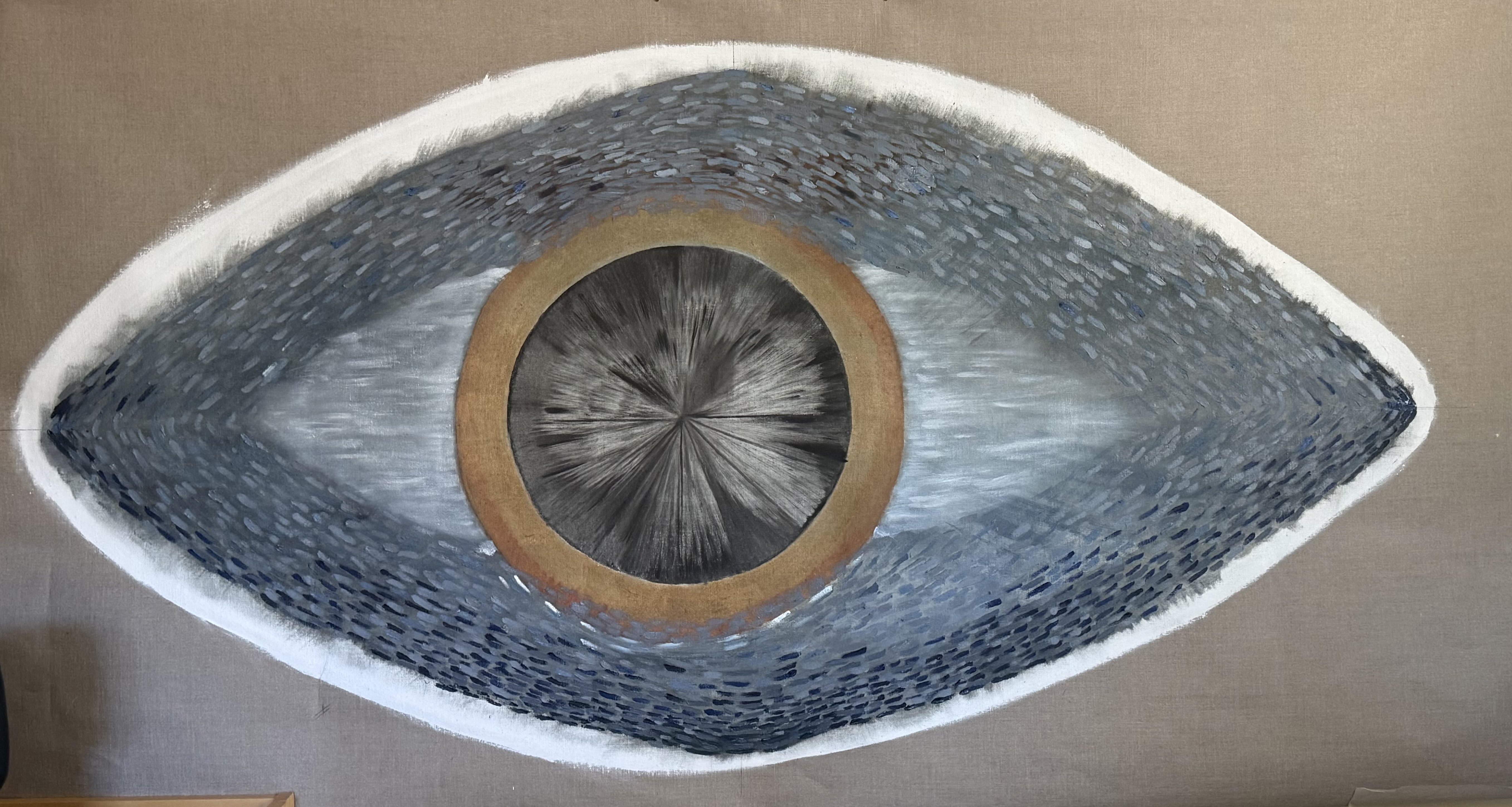
The Blue Eye Humpback whale · in progress
Moral Witness · Single Work
The Blue Eye
Humpback Whale · Oil on Mandorla Canvas · 36 × 72 in.
The canvas is not a support for the image. The canvas is the eye.
I — Object and Encounter
The entire surface is the eye.
The Blue Eye is painted on a custom mandorla-form canvas — an elongated oval, the precise geometry of an eye — in which a humpback whale meets the viewer in direct, unmediated gaze. The technique itself shifts across the surface: expressive, Van Gogh-influenced impasto in the outer zones of the whale's skin moves through a carefully managed middle passage into full photorealism at the iris and pupil. The final mark placed on the canvas is a catchlight — a single point of light within the pupil — that completes the work's argument: the animal is present, it sees, and being seen by it carries consequence.
The mandorla form admits no neutral territory. There is no rectangular field to retreat into, no corner where a viewer can stand outside the gaze. Standing before it, you are either in relationship with the animal, or you have looked away.
II — The Technique Gradient as Argument
A single surface, increasingly accountable.
The central proposition of The Blue Eye is the painterly gradient as conceptual structure. This is not expressionism and photorealism deployed in adjacent zones as a compositional device — it is a continuum. A single surface through which the act of looking becomes progressively more precise, more still, more accountable.
The outer skin is rendered in loose, energetic brushwork — the paint itself alive, moving, felt, carrying the emotional register of the Van Gogh tradition. The ground layer for this zone was laid in remnant studio paint: accumulated sludge from prior sessions, already carrying the blue-gray palette of deep water, a materially honest foundation whose organic variation mimics the barnacled, ancient surface of the animal's hide.
As the composition moves toward the eye, the brushwork decelerates. The marks tighten. The palette warms — humpback eyes carry a deep amber-brown that surprises those who expect darkness. By the time the iris is reached, the paint is smooth, dimensional, reading as wet, reflective, alive. That final mark — the catchlight — is the point at which technique completes its transformation into presence.
III — Position and Lineage
A shape reserved for the sacred.
The mandorla — vesica piscis — carries a long history. In early Christian and medieval iconography, it was the geometric frame reserved for figures of transcendent significance: Christ in Majesty, the Virgin in Glory. Its use here as the literal shape of the canvas is not ironic. It is a direct claim about category. What we are losing belongs in the register of the sacred. The painting insists on this without moralizing, by making the geometry itself the argument.
This work neither aestheticizes loss nor deploys beauty as consolation. It uses beauty as demand — the formal quality of the painting as the precise measure of what is at stake.
IV — Genesis
A ship built, unknowingly, as a whale.
The work originated in an encounter aboard a Ponant expedition vessel. Before boarding, I came across a photograph of the ship's Blue Eye Lounge — a below-waterline bar built into the hull, its ceiling arching in white ribs, its great oval windows gazing into the deep. The immediate, unbidden response was: that is a humpback whale eye.
The lounge had been built — architecturally, atmospherically — as the interior of a whale. The ribs of the ship were the ribs of the animal. The windows were its eyes. The passengers, drinking and talking and watching the water, were inside the creature, looking out.
That coincidence of design and perception became the generative condition of The Blue Eye. The mandorla stretcher was built specifically for this work — not as formal experiment, but as the direct translation of the original perception: the eye-shaped canvas that is the eye, not a painting placed within a neutral field.
You see me. What will you do?
V — The Conservation Dimension
A recovery that is real, but not stable.
Humpback whales were reduced by commercial whaling to an estimated ten percent of their pre-industrial population by the mid-twentieth century. The 1966 international moratorium on humpback hunting initiated a recovery described as one of the genuine successes of the conservation era — current global population estimates range between 80,000 and 90,000 individuals, with some populations approaching pre-whaling numbers.
~10%
Pre-industrial population, at the low point
1966
International hunting moratorium
80–90K
Estimated global population today
The ocean they are returning to is categorically different from the one their ancestors inhabited. Shipping traffic, sonar systems, shifting krill distribution driven by ocean warming, and entanglement in fishing gear are the primary contemporary threats. The recovery is real. It is not stable. The decisions that protect it are made continuously, in rooms that contain neither whales nor paintings.
A portion of proceeds from The Blue Eye, and from any licensed print editions, is directed to organizations whose work is structurally aligned with humpback survival — sustainable fisheries, blue carbon ventures, Indigenous-led marine stewardship, and bioacoustic monitoring. This is not philanthropy appended to an object. It is the work's argument made material.
VI — On the Catchlight
What makes a painting impossible to leave.
The Mona Lisa has been studied for five centuries — the sfumato technique analyzed, the subject's identity debated, the landscape mapped for geological accuracy. What has never been fully explained is the painting's hold: the quality that makes it feel singular, even amid millions of reproductions.
The catchlight. That small suggestion of reflected light in the eye that tells the nervous system, before thought intervenes: this is alive.
Everything in The Blue Eye — the remnant sludge ground, the swirling expressive skin, the amber iris, the commanding pupil — is in service of that single point. When it is placed, the painting will be complete. The eye will look back. And what looks back will be not paint, not technique, not an image of a whale — but the whale itself.
The canvas is not a support for the image. The canvas is the eye.
Old Holland oils on custom mandorla stretcher · Conservation partnerships available upon inquiry
Some moments you didn't choose to remember. They just stayed.
The game that went to overtime. The design that made everyone stop. The performance that made the viewer lean in closer.
You didn't plan to care that much. And then you did.
Some things enter the culture and never leave — not because they were marketed that way, but because they arrived at exactly the right moment and found exactly the right nerve. Collective. Personal. Both at once.
That is what this sanctuary holds.
Not the objects. Not the names. The feeling of being present for something that turned out to matter — to you, and to everyone else in the room.
The Cultural Archive is where those moments become paint.
Welcome to Sanctuary II.
Memory is the original archive. Paint is how we keep it from fading.
Old Holland oils · Canvas · The origin work
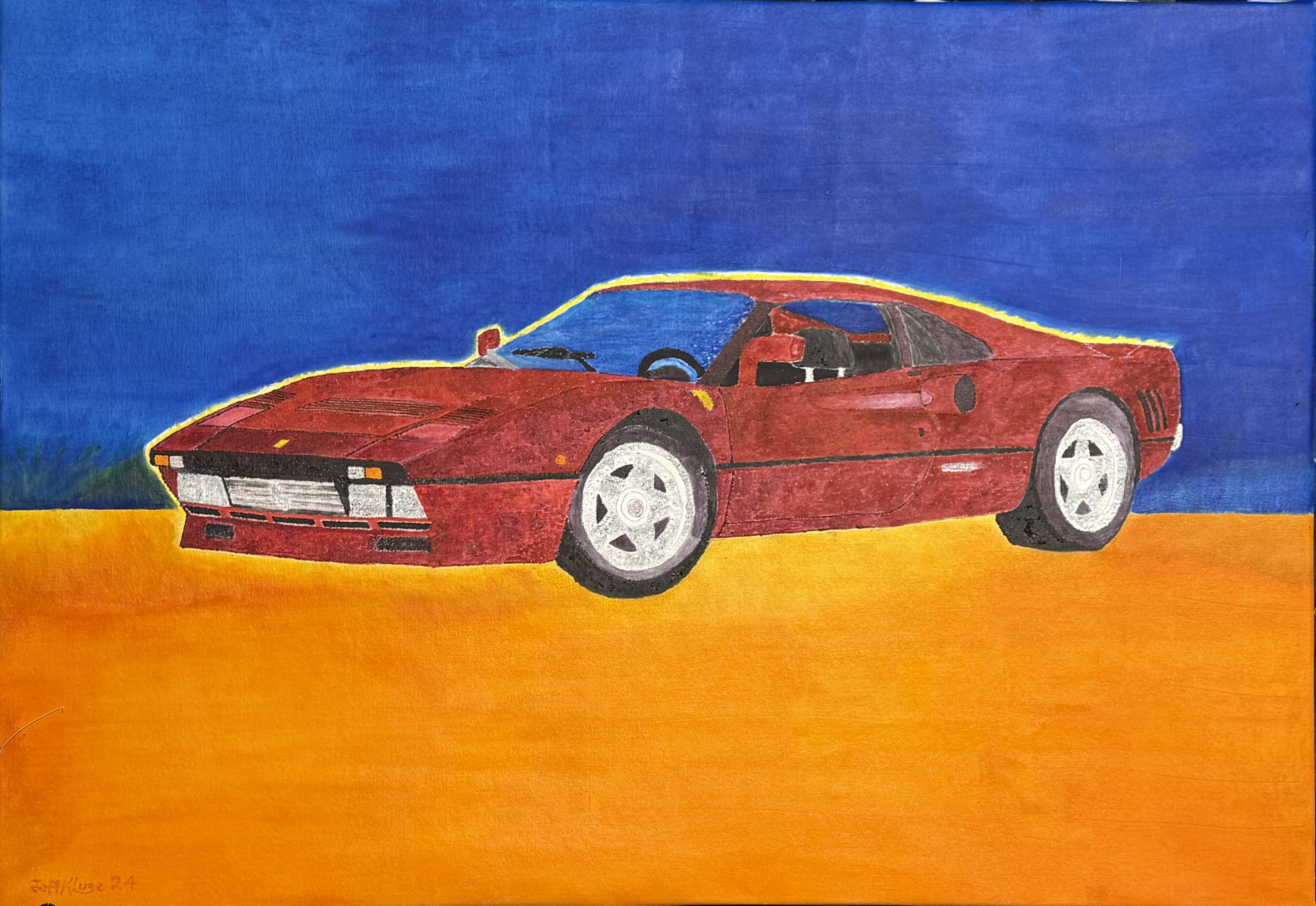
Ferrari 250 GTO
The Beginning
Some icons transcend their original purpose.
The Ferrari 250 GTO began as a racing machine, but time transformed it into something larger — a symbol of craftsmanship, aspiration, rarity, and cultural memory.
When I painted this work, I thought I was creating a portrait of a remarkable automobile.
I was wrong.
I was painting the first piece of what would become the Cultural Archive.
Long before I understood the concept, the 250 GTO taught me that certain objects stop belonging to history and begin belonging to culture. They become vehicles for memory, carrying stories from one generation to the next.
This painting marks the beginning of that exploration.
More from the archive
Every work carries a price.
Each is set through the Comparative Affinity Matrix — benchmarked against the Masters whose register the work inhabits and the contemporary artists it stands beside, then tracked against mid-market and blue-chip trajectories over ten and twenty years.
The price is the same for everyone. It is not set by who you are, or by what a room thinks you can pay.
The full valuation and Creative Dossier travel with each work, registered on Authentify Art. Ask, and I will walk you through both.
Cultural Archive › Ichiban · 一番
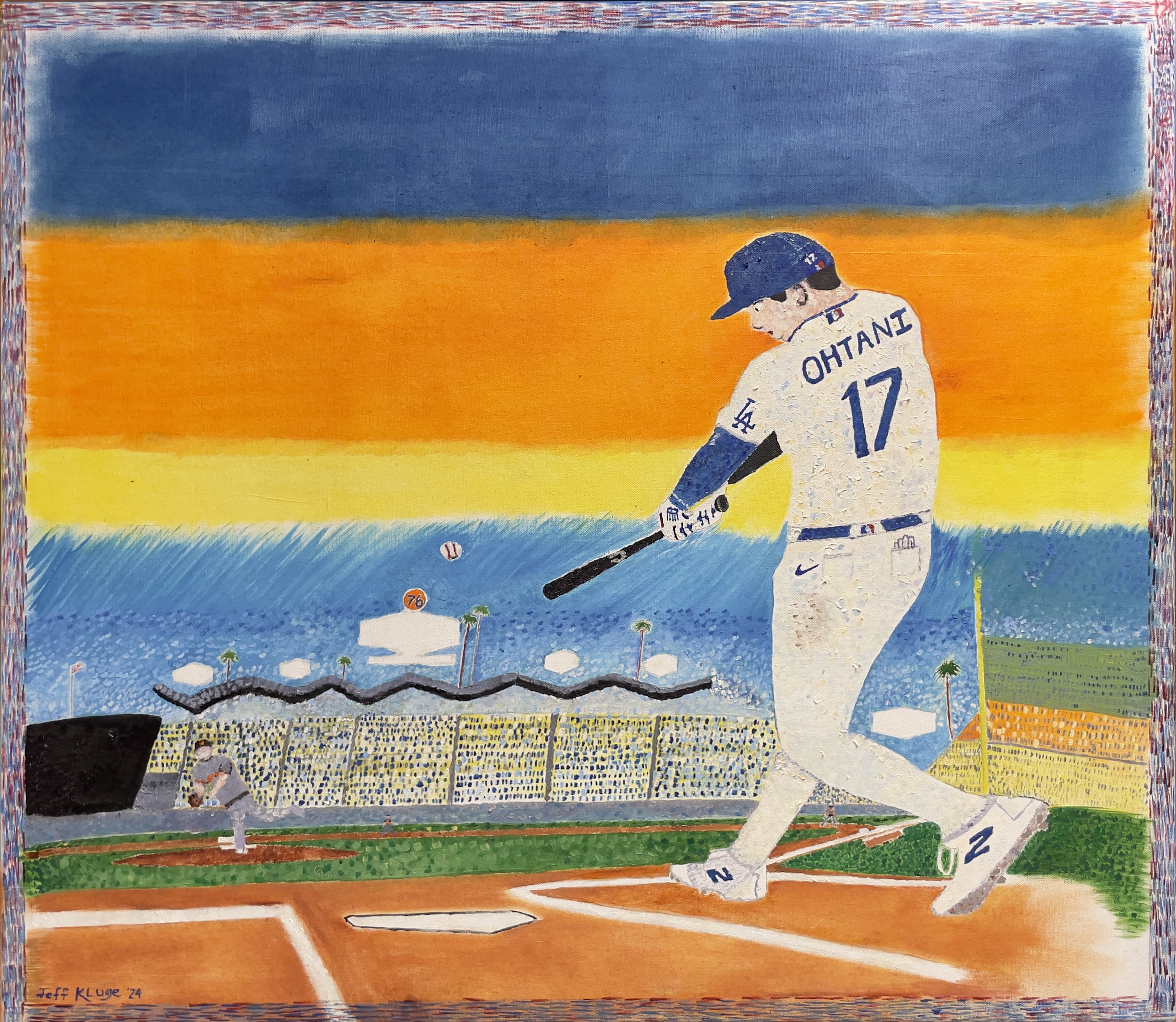
Ichiban
一番 · Number One · Shohei Ohtani · Old Holland Oils on Belgian Linen
There are athletes, and then there are phenomena. Ohtani does not fit the categories we built for the sport — he exceeds them. Ichiban is not a portrait. It is a meditation on what it means to be singular in a world that rewards the legible. These works ask: what do we do with something we have never seen before?
一番
Number one
38²
Inches each
5
Edition tiers
Anchor Work
Ichiban · 一番
Shohei Ohtani · The Singular One
The word means number one, but its weight is heavier than ranking. In Japanese, ichiban carries the full gravity of first — not just in position, but in kind. That is what this work holds.
The Two-Way
二刀流 Nitoryu · Two-sword style
38 × 38 in. Old Holland oils on Belgian linen
Nitoryu · 二刀流
The Two-Way Player · The Impossible Standard
They said it could not be done at this level. He did it anyway. Nitoryu — the two-sword style of the samurai — is the cultural frame that Japan reached for to describe what Ohtani does. This work holds that frame.
The Record
記録 Kiroku · The Record
38 × 38 in. Old Holland oils on Belgian linen
Kiroku · 記録
The Record · What the Numbers Cannot Contain
Statistics are a container. What Ohtani does breaks the container. This work is about what remains when the numbers have been written down — the thing that the record cannot hold.
Works in the series
I
Ichiban · 一番
The anchor work
II
Nitoryu · 二刀流
The two-way
III
Kiroku · 記録
The record
IV
Yume · 夢
The dream
Availability
Original works · Available by inquiry.
"What does it mean to be first in kind, not just in rank?"
Cultural Archive › Ferrari: Dawn of the Supercar
Ferrari: Dawn of the Supercar
Six Works · 288 GTO to F80 · Old Holland Oils on Belgian Linen · 38 × 38 in.
Enzo Ferrari did not build cars. He built arguments about what was possible. Each machine in this series is a chapter in that argument — from the 288 GTO that defined what a supercar could be, to the F80 that asks the question again for a new era. These are not automotive paintings. They are portraits of ambition made metal.
6
Works in suite
38²
Inches each
40
Years · 1984–2024
Work I · The Origin
288 GTO
1984 · The machine that named the category
Before there was a word for what it was, there was this. The 288 GTO did not arrive to fill a category — it arrived to create one. This is the work that opens the series: the moment the supercar was born.
Work II · The Icon
F40
1987 · Enzo Ferrari's final car · The one that mattered most
Enzo Ferrari died the year after this car was shown to the world. He knew it was his last. The F40 carries that knowledge in every line of its body — it is a car that knew it was the end of something. This work holds that weight.
Work IV · The Name
Enzo
2002 · The car that carried his name
Ferrari named this car after its founder — not as tribute, but as statement. The Enzo is not the fastest, not the rarest, not the last. It is the one that bears the name. That is its own category.
The six works
I
288 GTO
1984 · The Origin
II
F40
1987 · The Last Enzo
III
F50
1995 · The Millennium
IV
Enzo
2002 · The Name
V
LaFerrari
2013 · The Hybrid
VI
F80
2024 · The New Argument
Availability
Original works · Available individually or as the complete suite, by inquiry.
"Not automotive paintings. Portraits of ambition made metal."
Some feelings ask to be given form.
Love. Longing. Devotion. Gratitude — the moments that reshape a life and stay long after the words are gone.
Some experiences arrive whole in the heart before they become language. We know them before we can explain them.
Emotional Architecture holds those moments. Each work here turns feeling into form — building the spaces where connection, memory, and devotion can last.
Welcome to Sanctuary I.
Architecture creates places where life can unfold. Emotional Architecture asks the same of feeling.
Old Holland oils · Belgian linen · 38 × 38 in.
Je T'aime
The Shape of Recognition
It began as an anniversary gift.
I studied hearts for weeks — hundreds of them. Too decorative. Too sentimental. Too precise. They looked like hearts. They didn't feel like love.
Then a worn red shoelace, pulled from an old pair of running shoes, ended up on the table.
I shaped it by instinct — a curve, another curve, a tapering point. Nothing measured, nothing calculated. Only what felt right.
When I stepped back, I knew.
I drew a center line, matched one edge to it, mirrored it to the other side. The shape that emerged became Je T'aime — not a symbol designed to mean love, but a form found the same way people find love itself. Sometimes you just know.
Chapter Two
Fleur d'Amour
When Love Unfolds
Je T'aime became a language — a shape that could carry affection, devotion, connection.
The next question was simple: what happens when one expression of love becomes many?
Four Je T'aime hearts, meeting at a common center. Not a rose. Not a botanical study. A flower made entirely of declarations.
Love, rarely alone. It gathers. It becomes larger than itself.
Other Ways of Saying I Love You
Every work carries a price.
Each is set through the Comparative Affinity Matrix — benchmarked against the Masters whose register the work inhabits and the contemporary artists it stands beside, then tracked against mid-market and blue-chip trajectories over ten and twenty years.
The price is the same for everyone. It is not set by who you are, or by what a room thinks you can pay.
The full valuation and Creative Dossier travel with each work, registered on Authentify Art. Ask, and I will walk you through both.
Every sanctuary holds something for those who linger.
Somewhere in these works are the opening notes of Rhapsody in Blue.
Find them, and you'll know love isn't the only language spoken here.
Emotional Architecture › Fleur d'Amour
Fleur d'Amour
Four Works Around the Heart · Old Holland Oils on Belgian Linen · 38 × 38 in.
It began with a single word — Je T'aime — and the question of whether paint could hold what language only gestures toward. These four works circle the heart from different directions. Not love as sentiment. Love as a structural fact of being alive — the thing the architecture of a person is built around, whether they know it or not.
4
Works in series
38²
Inches each
5
Edition tiers
Work I · The Anchor
Je T'aime
I Love You · The work that started everything
Three syllables. Infinite weight. Je T'aime is the work that opened this series — the moment the question was asked in paint and the paint answered back. Everything else in the Fleur d'Amour series is a consequence of this beginning.
Work II
Work II
The structural center · The weight beneath the feeling
After Je T'aime named the feeling, this work went looking for the organ. Not the metaphor — the actual thing. The muscle that does the work. This is the canvas that asks what we mean when we point to our chest and say: here.
Works III & IV
Two more works around the heart
38 × 38 in. each Old Holland oils on Belgian linen
The Remaining Works
The series completes its circle
The series began with a declaration and turned inward. These final two works complete the circle — moving from feeling to form, from the word to the silence that makes words possible.
The four works
I
Je T'aime
The anchor work · The declaration
II
Work II
The structural center
III
—
Title to be confirmed
IV
—
Title to be confirmed
Availability
Original works · Available by inquiry.
"Love as a structural fact of being alive."
This site is under continuous improvement and not all information on works is connected to the website yet. I value transparency and will happily forward you the information you may be interested in — please send me a note.